Every home cook should know how this dairy fat shapes a dish. It adds a sweet, creamy taste and melts to give a smooth mouthfeel that carries other flavors across a plate.
Think of it as an everyday kitchen ingredient that does more than bake; it helps brown proteins, enrich sauces, and finish simple foods like bread or pan sauces with bright richness.
This short guide shows how to choose the right option for a recipe, manage temperature, and pick the best method for stovetop or oven work. You will learn what to watch for in the pan and when to lower heat if smoking begins.
Later sections cover types and when to use clarified or higher-heat forms. For a practical primer and extra tips, see a focused how-to on using butter for home cooks.
Why Butter Matters in the Kitchen
A simple spoonful of dairy fat can shift a dish from plain to memorable. It adds flavor and gives a rounded richness that many neutral oils cannot match.
Sensory-wise, the spread offers dairy sweetness and a gentle nuttiness when it browns. That warm note deepens savory dishes and lifts delicate desserts.
How it shapes taste and texture
As a fat, it carries aromatics: garlic, herbs, and spices bloom in warm fat and then move through the final food.
“When sautéing, ingredients absorb the flavors of the fat; in soups and stews, fat can be added and later removed while flavor remains.”
- Sauces: Emulsified sauces gain a glossy, smooth texture that improves mouth feel.
- Sautéing: Onions cooked in this fat become more aromatic and leave lasting flavor even after skimming.
- Finishing: A small pat at the end adds shine and subtle richness to toast or eggs.
| Use | Effect | When to choose |
|---|---|---|
| Start of sauté | Builds base aroma | Onions, garlic, mushrooms |
| Emulsion | Smoother texture | Pan sauces, vinaigrettes |
| Finish | Shine and richness | Steamed veg, seafood, eggs |
How Butter Works: Butterfat, Water, and Milk Solids
Know the parts and you control the result. A typical stick combines butterfat, water, and milk solids. That content and balance determine how the fat melts and what it does to texture.
What happens when it melts and why texture changes
As the block warms, the solid emulsion breaks. The butterfat turns liquid while water starts to evaporate. Milk solids separate and float as tiny specks.
Milk solids and water content: effects on browning and baked goods
Milk proteins and sugars are the first solids to brown. That toasting gives rich flavor but also explains why browning can flip to burning fast.
Water content matters for baking. Steam from water helps lift and spread in baked goods, while the fat brings tenderness and richer texture.
Smoke point basics and why it burns at higher temperature
Foaming signals that water is leaving; when foam drops, browning can speed up. The smoke point sits around 250°F, so above that the fat breaks down and tastes acrid.
“If you need sustained high heat, choose clarified fat or a higher-smoke-point oil to protect flavor.”
- Pan-read cue: Foaming = water evaporating; lower heat when browning accelerates.
- Decision tip: Use clarified forms for higher temperature work to avoid burned solids.
Choosing the Best Butter in Cooking for Your Recipe
Choosing the right form of dairy fat affects flavor, salt control, and how the dish responds to temperature.
Unsalted for control
Unsalted butter is the baseline for precise seasoning. American unsalted sticks are usually at least 80% butterfat and behave predictably during baking.
Salted for convenience
Salted butter saves time but varies by brand. Expect about 1/4 teaspoon of salt per half-cup stick; taste as you go and adjust the final amount of salt.
Cultured and European-style
Cultured butter offers a tang that lifts simple baked goods like scones and pound cake. Use it where the spread’s flavor can shine.
European-style has higher butterfat (82–90%), melts faster, and adds richer mouthfeel. That difference matters for sauces and delicate pastries.
Clarified, ghee, and light spreads
Clarified butter and ghee remove milk solids, raising the smoke point and shelf life. They suit high-heat sautéing where plain spread would scorch.
Light spreads contain much less butterfat (≤40%) and often harm texture in baking. Reserve them mainly for spreading on bread.
| Type | Key trait | Best use | Notes |
|---|---|---|---|
| Unsalted | Neutral, ~80% butterfat | Baking, season-controlled recipes | Start point for most chefs |
| Salted | Added salt (~1/4 tsp/half-cup) | Everyday use, taste-as-you-go | Adjust final salt amount |
| Cultured / European | Tang, higher butterfat (82–90%) | Scones, sauces, rich pastries | Richer flavor and softer texture |
| Clarified / Ghee | Milk solids removed | Sautéing, frying at higher heat | More stable than plain spread |
| Light spread | Low butterfat (≤40%) | Spreading only | Can dry baked goods; avoid for baking |
Getting Butter to the Right Temperature and Texture
Small temperature shifts alter how the stick blends; learn two fast tricks to control it.
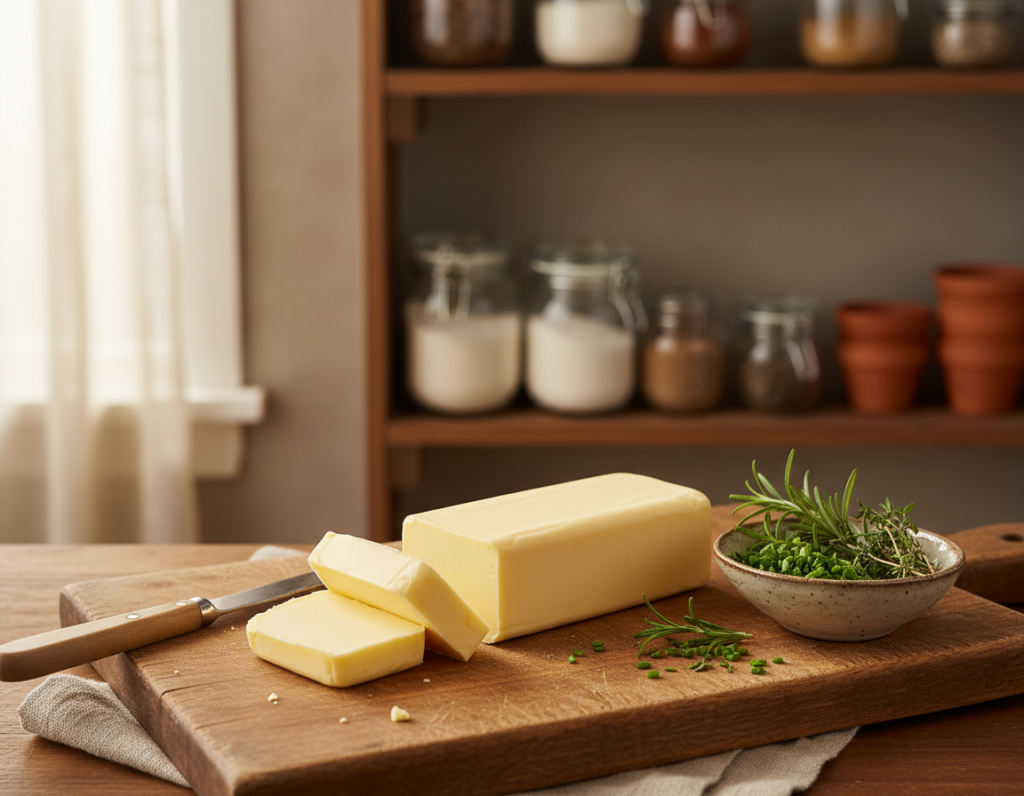
What “room temperature” means: soft enough to spread and blend smoothly, not oily or melted. Test by pressing with your thumb—if it yields but holds shape, it’s ready. This feel helps you judge readiness by hand.
When it matters: room temperature is crucial for creaming, quick folding into batters, and for smooth compound spreads or sauce finishes without lumps.
Heated glass method
Microwave a glass of water for 30–60 seconds, pour the water out, then invert the warm empty glass over a stick. Trapped heat and steam soften the block quickly.
- Check every 1–2 minutes to avoid melting.
- Rotate the stick if one side softens faster.
Grating cold butter for small pieces
Use a box grater on ice-cold butter to make tiny pieces. They disperse fast into doughs or melt quickly on warm toast.
Grated pieces also spread on bread without tearing soft slices, improving texture and presentation at serving time.
“Soft, even spreadability saves time and improves the final texture.”
Best Cooking Methods That Use Butter Well
Use gentle heat and timing to get golden edges and silky sauces every time. Follow simple steps and watch the pan; small moves protect milk solids and enhance texture.
Pan-frying for light browning
Preheat the pan over medium heat, add butter, and wait for melt and soft foam. Place fish, thin meats, or uniform-cut vegetables and cook, stirring or turning until light brown. Watch closely and lower heat if the solids darken too fast.
- Medium heat; add fat, wait for foam, then add ingredients.
- If foam gets aggressive or darkens, reduce heat or add a splash of oil to buffer.
Caramelizing vegetables
Cook chopped or thin-sliced vegetables over low heat with a small amount of butter for about 10 minutes. Patience lets natural sugars surface and soft edges form.
Use the result as a side dish, a soup base, or a topping to add richness and concentrated flavor to a recipe.
Building sauces and flavor add-ins
Butter is central to classic white sauces and quick pan sauces. It thickens, emulsifies, and gives shine. Add lemon juice for brightness, wine for depth, vinegar for sharpness, or mustard for bite. Finish with chopped herbs for freshness.
Beyond savory: browned finishes lift simple cakes and cakes-like desserts with warm, nutty richness.
| Method | Heat | Key cue | Best uses |
|---|---|---|---|
| Pan-fry | Medium | Butter melts, foams then clears | Fish, thin meats, veg |
| Caramelize veg | Low | Softening, golden edges, sweet aroma | Sides, bases, toppings |
| Pan sauce / emulsion | Medium-low | Glossy texture, smooth emulsion | Pan sauces, white sauces |
Common Mistakes When Cooking With Butter and How to Avoid Them
Too-high heat is the most common slip that turns rich flavor into bitter smoke.
Quick fixes: Lower the temperature at once and remove the pan from heat. If milk solids have blackened, wipe the pan and start with fresh fat to avoid bitter carryover.
Overheating to the smoke point and what to do instead
Watch for foam and dark flecks—those are signs the water is gone and milk solids will soon burn.
Drop heat, add a splash of oil to buffer if needed, or finish the dish at lower temperature to protect flavor.
When to switch to clarified butter or use a higher-smoke-point oil
For sustained hard sears or stir-fry-style work, choose clarified butter or a high-smoke-point oil such as sunflower, canola, or peanut.
Decision rule: use regular butter for low to moderate heat and flavor finishes; use clarified butter when you want butterfat flavor with better heat stability.
“Avoid heating fat until it smokes; smoke indicates decomposition.”
- Mind the content of water and solids; excess water causes splatter and uneven browning.
- Taste often and keep temperature control as your main tool for reliable results.
Conclusion
,Pick the right form and handle it with care to get the best flavor, richness, and texture from every recipe.
Start by choosing: unsalted for precise baking, salted for quick seasoning, cultured or European-style for added depth, and clarified for higher heat. Manage temperature and then select the correct method.
Finishing at the end adds shine and a rounded mouthfeel, while starting with fat builds a strong base for many recipes. Try one change now: use unsalted for baking or swap to clarified when heat is high.
Small habits—watching heat, tasting as you go, and choosing intentionally—bring steady improvement to your kitchen and everyday goods.