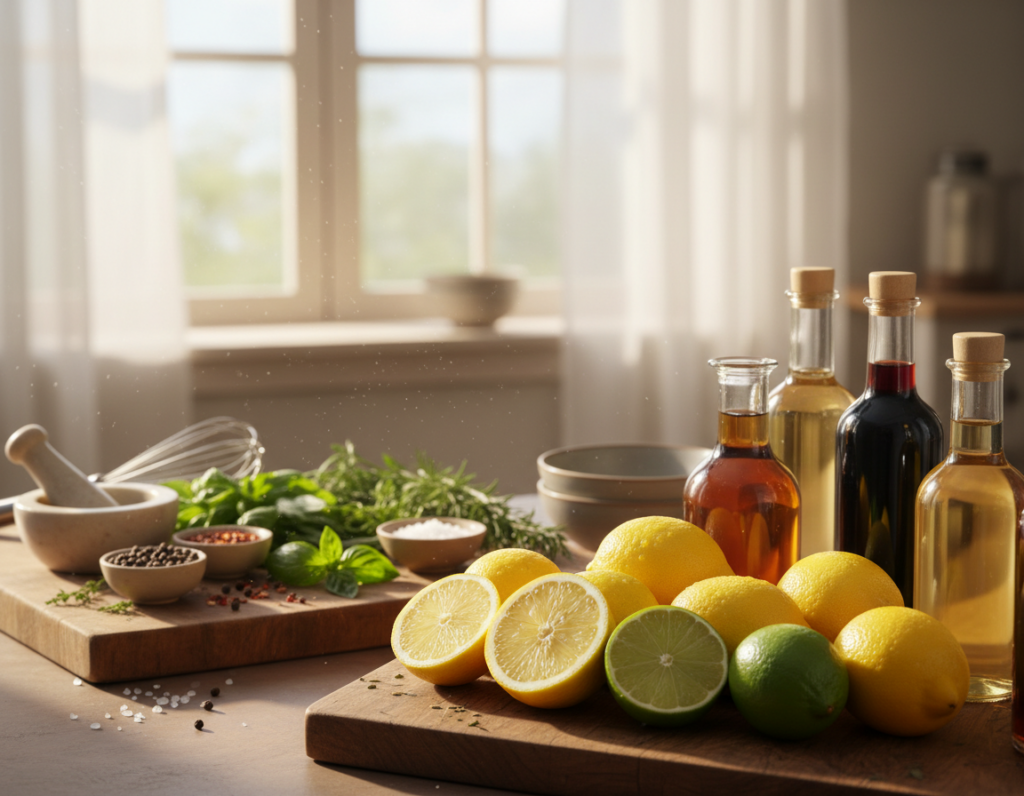
Every home cook needs a quick guide to how seasonings behave in the pan and on the plate. This short intro shows why crystal size, density, processing, and origin change flavor by volume and how ingredients perform in recipes.
Define the basics: for a home cook, “salt types cooking” means more than brands. It covers grain size, density, and additives that affect dissolve rate, crunch, and measuring by teaspoon.
We’ll set buyer expectations for baking, grilling, and finishing. You’ll learn when to use a shaker or a grinder and how a fine measure seasons more strongly than a coarse measure.
What to expect: clear decision factors—grain size, salinity by volume, processing/iodization, origin, and mineral color—plus practical swaps, brine math, and when specialty finishing salts add value.
Why salt matters in cooking flavor, texture, and food preservation
The right seasoning brings out umami, sharpens sweetness, and helps foods keep longer.
Flavor and taste are amplified when the right mineral is present in a recipe. It makes soups, vegetables, and sauces taste more complete by boosting sweet, sour, bitter, and umami notes.
How it balances sweetness
Just a small pinch can brighten desserts and fruit without making them taste salty. That is why finishing crystals appear on chocolate and caramel to lift taste and contrast sweetness.
How it changes texture and browning
Applied to meat, the mineral draws moisture to the surface, then lets juices reabsorb for better tenderness and juiciness.
On the exterior, it helps form a crust and improves browning, while larger crystals give occasional crunchy pops.
When it preserves and ferments
Preservation works because this mineral lowers water activity, slowing spoilage and guiding fermentation pathways.
Use additive-free options for pickling and fermentation; iodine or anti-caking agents can cloud brines or hinder microbes.
- Practical salt used examples: seasoning pasta water, dry-brining poultry, salting sliced tomatoes, and finishing roasted vegetables.
What changes between different types of salt
Crystal shape and processing change how seasoning measures and behaves in a recipe.
Grain size and shape control dissolve rate and texture. Fine grains melt fast and season evenly. Coarse crystals give pinch control and need weighing for accuracy. Flaky crystals provide a quick melt and a crunchy finish.
Salinity by volume matters: denser crystals pack more sodium per teaspoon. Chefs often weigh coarse crystals; a rough guide is 1 tsp table = ~1.5–2 tsp kosher by volume. When switching to a finer grain, start with less.
Processing, origin, and minerals influence moisture and flavor. Refined table grains often include anti-caking agents and iodine. Kosher is coarser and usually not iodized. Sea harvests yield varied color and texture, but trace minerals don’t provide meaningful nutrition at normal servings.
| Type | Crystal | Refined / Iodized | Best use |
|---|---|---|---|
| Table | Fine | Refined, often iodized | Baking, everyday measuring |
| Kosher | Coarse | Less refined, typically not iodized | Seasoning, brining (weigh for accuracy) |
| Sea | Coarse to flaky | Varies; less refined | General use, finishing |
For a broader primer, see the salt basics guide for practical swaps and brine math.
Salt types cooking: the main options and what they’re best used for
A short shopping map helps you pick the best pantry crystals for everyday use and special finishes.
Table and iodized for everyday baking
Table salt is fine and predictable. It dissolves quickly, so it’s the default for baking and precise measuring.
Kosher for seasoning meat and brines
Kosher salt has larger crystals, so chefs pinch and dry-brine by feel. Crystal size varies by brand, so be consistent.
Sea salt for versatile use
Sea salt works well in pans and as a light finishing touch. It can contain trace minerals and may clump in humid kitchens.
Flake and fleur de sel for finishing
Flake and fleur de sel give a quick melt and delicate crunch. Use them last on steaks, roasted veg, or chocolate for texture and shine.
Sel gris, pickling, and rock salt
Sel gris (Celtic) is moist and mineral-forward—great for brines. Pickling salt is additive-free for clear brines and fermentation.
Food-grade rock salt is best for ice cream makers and salt crusts; it dissolves slowly and is not for everyday seasoning.
| Category | Common use | Best used for |
|---|---|---|
| Everyday (table, kosher) | Measuring, seasoning | Baking, dry-brining, weekly meals |
| Finishing (flake, fleur de sel, finishing salt) | Plating, texture | Steaks, desserts, salads |
| Functional (pickling, rock) | Preservation, tools | Canning, ice cream freezes, salt crusts |
Choosing the right salt for your dish and cooking method
Match seasoning to the job. Choose based on dissolve speed, how you handle a pinch, and the final mouthfeel you want on the plate.
Best used for baking and doughs: Fine table crystals dissolve fast and distribute evenly through batters and bread doughs. That even dissolve supports predictable fermentation and a consistent crumb in loaves and pastries.
Grilling, roasting, and weeknight cooking
Kosher grains are great for pinching at the stove. They stick to proteins and vegetables and give forgiving control when you season by feel.
Sauces and soups
Use fine grains in liquids so they integrate quickly and avoid salty hot spots in a single spoonful.
Finishing and final texture
Flake and fleur de sel are the go-to finishing salt options. Add them at the end to give a crisp crunch and a bright aromatic pop on steaks, salads, and desserts.
“Season in layers: early for depth, late for brightness, and finish for texture.”
- Workhorse + finishing: keep one versatile grain for daily use and one flake for plating.
- Workflow: season early to penetrate, top late to add snap and shine.
| Use | Recommended | Why |
|---|---|---|
| Baking & doughs | Fine table | Even dissolve, predictable rise |
| Grilling & roasting | Kosher | Pinch control, surface adhesion |
| Finishing | Flake / fleur de sel | Crunch and presentation |
How to substitute salts without over- or under-seasoning
A teaspoon isn’t the same across every jar; crystal density alters how much flavor you add.
Why swaps fail: volume measurements lie when crystals differ. A packed teaspoon of fine grains weighs more than a loose pinch of flakes, so the perceived salinity shifts.
Swapping kosher salt and table salt safely
Start lower when you swap. Table salt is denser than kosher salt, so use roughly half the amount to begin, dissolve, then taste and adjust.
When sea salt can replace kosher salt near 1:1
If the sea salt has a similar crystal size to kosher, swap by volume for rubs and general seasoning. For flaky or very coarse sea grains, weigh to match flavor intensity.
Brining conversions: coarse vs fine
Rule of thumb: 1 cup kosher ≈ 1 cup coarse sea ≈ 1/2–3/4 cup table. Brines tolerate slight variation, but consistency gives repeatable results.
- 1 tsp table salt ≈ 1.5–2 tsp kosher salt (brand dependent).
- Weigh coarse grains for baking and brines to be precise.
“Dissolve fully, taste the liquid, then adjust—time and temperature change how seasoning lands.”
How to use finishing salt for maximum crunch and aroma
A few delicate crystals right before service give dishes an immediate sensory boost.
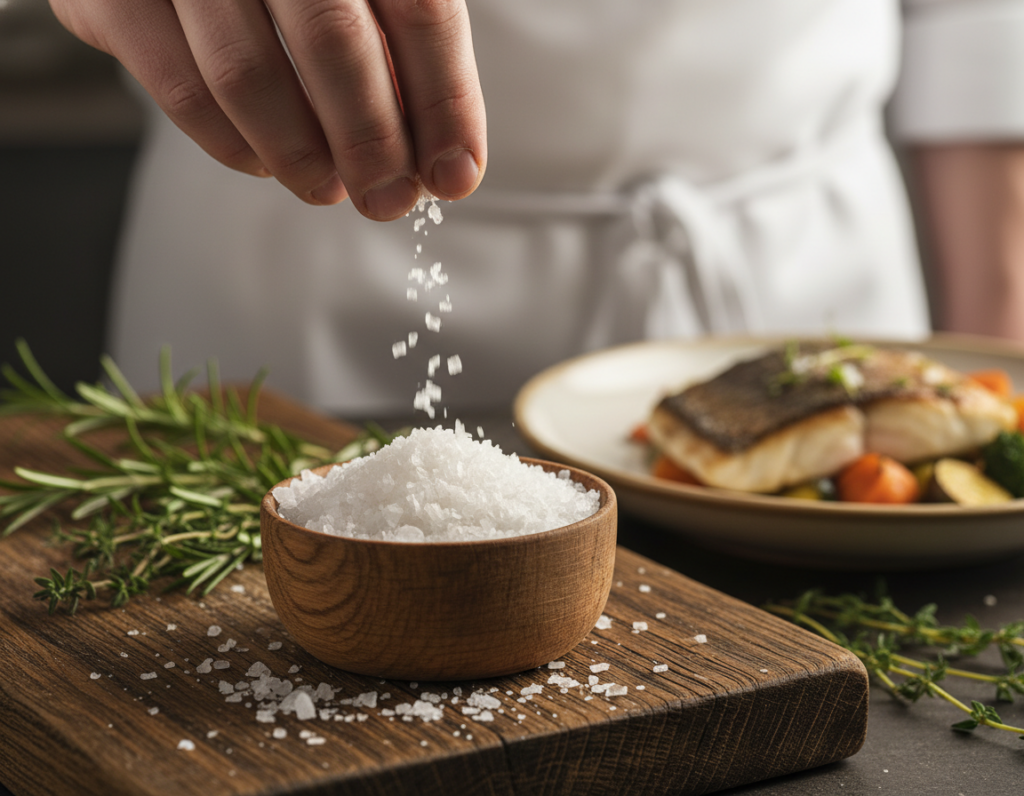
What finishing salt is: larger, fragile crystals—like Maldon flakes or fleur de sel—meant to sit on the surface so you taste a pop instead of having them fully dissolve.
When to add finishing crystals
Timing matters. Add these crystals after slicing a steak, after plating vegetables, or just before serving a dessert.
Heat and steam dissolve crystals quickly. That means add them late to keep crunch and aroma intact.
Texture pairings and examples
Flaky crystals perform best on rich or fatty bites. They lift the taste of buttered bread, ribeye, and dark chocolate alike.
- Brownies or dark chocolate: a light sprinkle for contrast.
- Grilled ribeye: crystals on high points for crunch.
- Roasted asparagus or sliced tomatoes with olive oil: finish for brightness.
Use restraint. A little goes far; too much creates sharp, uneven taste instead of balance.
“A final pinch adds crunch, aroma, and a focused burst of flavor.”
Plating tip: sprinkle from a small height for even coverage and place crystals on edges or ridges where they stay dry longer. For handling, keep a small pinch bowl to protect the finishing crystals from steam and contamination in the kitchen.
Health considerations: iodine, sodium, and what “mineral-rich” really means
Most Americans get too much sodium, but not everyone gets enough iodine.
Iodine and thyroid support
Iodized table salt was introduced in 1924 to prevent iodine deficiency. Iodine helps the thyroid make hormones that regulate metabolism and growth.
Note: many specialty jars are not iodized, so if dietary iodine is limited, choose iodized products or other iodine-rich foods.
Sodium intake and where it comes from
Americans average about 3,400 mg sodium per day, above the 2,300 mg guideline. Processed and packaged foods drive most of that excess for many people.
If you cook mainly at home, measure and taste while you season. If you rely on prepared foods, focus efforts there first to lower intake.
Trace minerals: sea salt and pink salt realities
Sea salt and pink salt can contain tiny amounts of minerals like iron, magnesium, and potassium. Those trace elements add color and flavor more than meaningful nutrition.
To change nutrient status you would need impractically high intake, which would also raise sodium dramatically. For hypertension, kidney disease, or other concerns, get tailored advice from a clinician.
Buying tips: what to look for on labels and in the salt aisle
A quick aisle checklist helps you pick a jar that will perform the way you expect at the stove and on the plate.
Label-reading checklist: look for grain size (fine, coarse, flake), iodized vs non-iodized, anti-caking agents, and any added flavors or smoke. “Pickling” or “canning” usually means additive-free; “flake” or “fleur de sel” signals finishing use.
Match grain to your tools
Fine crystals work in shakers and for baking. Coarse grains suit pinch bowls and rubs. Large crystals are best for grinders. Choose a product that behaves predictably in the way you handle it.
Sourcing, color, and quality
Table products often come from underground salt deposits and include anti-caking agents and iodine. Sea varieties are salt harvested by evaporation and vary in moisture and shape.
Color (white, pink, gray, black) adds visual appeal but prioritize dissolve versus crunch first.
| Label cue | What it means | Buy if… |
|---|---|---|
| Pickling / canning | Additive-free | You preserve or ferment |
| Flake / fleur | Delicate crystals | You finish plates |
| Iodized | Added iodine | You need dietary iodine |
Quality note: choose reputable brands that disclose sourcing and contaminant testing. A good starter cart: one workhorse (kosher or fine sea), one baking fine jar, and one flake for finishing.
“Read grain, not just color; function beats flair when you cook.”
Storage and shelf life: keeping salts dry, fresh, and clump-free
Store pantry seasonings where cool, dry air keeps crystals free-flowing and flavorful.
Shelf-life truth: The mineral is chemically stable and won’t go rancid, but humidity ruins texture. Damp air causes clumps and makes flaky finishing crystals lose their pop.
Best containers and pantry conditions for most jars
Use airtight jars for long-term storage. Keep a covered pinch bowl at your prep station for daily seasoning. For coarse bags, choose grinder-ready packaging or transfer chunks into a jar.
Moisture-prone varieties
Fleur de sel and Celtic sea salt often feel damp and can clump. Break lumps gently and reseal right away. Do not “dry” them over heat—heat can change texture and flavor.
Flavored and smoked blends
Blended jars with spices and herbs lose aroma over time. Store them in a cool, dark place and expect peak flavor for about 6–12 months. Label purchase dates to know when to refresh.
| Container | Best for | Practical tip |
|---|---|---|
| Airtight glass jar | Fine and coarse grains | Seal after each use; keep away from stove steam |
| Covered pinch bowl | Daily seasoning | Keep near prep but not near boiling pots |
| Dark, cool cupboard | Flavored & smoked blends | Label date; use within 6–12 months |
Kitchen rule: avoid storing near the sink, dishwasher, or kettle. For more on preventing clumps and maintaining freshness, see how to store salts.
Common mistakes when cooking with different salts
Most seasoning issues start with assuming a teaspoon equals a teaspoon. Coarse crystals pack loosely, leaving air gaps, while fine grains compress and deliver more immediate bite.
Fix: weigh for baking and brines. If you must spoon, follow brand-specific conversion charts to avoid oversalting.
Measuring by volume instead of by weight
Counting by teaspoons ignores crystal density. Table grains are denser than kosher, so a “teaspoon” can be far saltier than expected.
Using the wrong product for the job
Coarse kosher in delicate cakes dissolves unevenly. Iodized or anti-caking table product in pickles can cloud brine or interfere with fermentation.
Overdoing specialty mineral like kala namak
Black salt (kala namak) brings a sulfur-forward aroma. Start with a pinch, taste, then build slowly.
“Measure by weight when precision matters; add finishing crystals at the end for texture, not early.”
- Consistency tip: stick with one kosher brand for daily use so your pinch is repeatable.
- Troubleshooting: if a dish tastes flat, add a small amount more; if harsh, balance with acid, fat, or dilution.
| Mistake | Why it happens | Quick fix |
|---|---|---|
| Volume measuring | Crystal density varies | Weigh or use brand conversion |
| Wrong product choice | Additives or size inappropriate | Use pickling product for canning; fine grains for baking |
| Early finishing | Heat melts flakes | Add flakes at service for crunch |
Conclusion
Choose a few reliable jars and your daily seasoning decisions get much easier. For most home cooks, the best choice depends on crystal size and the task, not marketing or color.
Pantry shortlist: keep one fine jar for baking (table salt), a coarse jar for everyday work (kosher salt), and a flake for finishing to add crunch and aroma.
When you swap between coarse and fine, start lighter, taste, and adjust. This prevents oversalting and keeps flavor balanced.
Watch overall sodium for health, and choose iodized options if dietary iodine is limited. Try one new finishing or specialty jar at a time and judge it on a familiar dish—keep what truly improves your cooking.