Smart preparation means a few practical choices that cut hands-on minutes while keeping meals satisfying. Plan meals, shop ahead, and pick fast, familiar recipes so evenings feel calm instead of rushed.
Use one-pan or one-pot meals, batch cook proteins, and freeze portions for quick dinners later. Keep knives sharp, grate or cut vegetables small, and choose quick-cook grains or noodles. Boil water in the kettle to speed things up.
Start small: change one meal, prep one component, or add one habit each week. Modern tools like a pressure cooker or stick blender help, and thoughtful shortcuts—canned legumes or a good tomato sauce—fit into a balanced home menu.
This guide previews systems that work on weeknights: meal planning, pantry strategy, batch prep, fast-cook methods, freezer backup, and smart leftovers. For more practical ideas, see time saving cooking tips.
Why smart prep matters when you want to save time cooking at home
Smart prep keeps evenings manageable by turning a string of chores into a few simple routines. Small, repeatable actions let you cook from scratch without feeling like your whole night is gone.
Cooking from scratch without feeling “chained to the stove”
People often think home meals steal the evening because effort is scattered: decide, search, chop, wait, and clean. That scattered work makes a short cook period feel endless.
Shift effort to a single prep session and you free up evenings for other things. Choose less-processed building blocks and use hands-off methods so dinner can finish itself.
Where the minutes really go: planning, prep, and cleanup
Many minutes vanish while you find ingredients or wait for water to boil. Chopping and measuring add more small delays, and extra pans mean more cleanup.
- Deciding on what to make
- Finding ingredients and tools
- Chopping, measuring, and washing up
By building a simple system—fewer store runs, fewer dishes, fewer last-minute choices—you can save time and still enjoy good food.
Plan your meals and shop once to make weeknight cooking easier
A short planning session each week ends the nightly scramble and keeps dinner decisions simple.
Pick familiar recipes with clear steps so you can move quickly on busy days. Choosing meals your family already likes lowers risk on a work night and reduces rereading mid-cook.
Read recipes first to stage tasks
Before you start, read the recipe through. That helps you order tasks — start the rice or pasta water, chop aromatics, preheat the oven — and avoids bottlenecks.
Plan around your schedule
Map dinners to the week by matching meal speed to each day’s demands. Put quicker meals on nights with late meetings or activities. Plan one flexible night for leftovers or a simple bowl.
- Do a short planning session to prevent the “what’s for dinner?” stall on busy work nights.
- Shop once (or one main shop plus a small produce top-up) so ingredients are in place when it’s time to cook.
- Make sure you have core staples — protein, veg, carb, and a sauce — before locking the plan.
- Keep the plan in one visible place (notes app, whiteboard, or fridge list) to cut decision fatigue at 5 p.m.
Stock a time-saving pantry and fridge so you always have ingredients
A well-stocked pantry and fridge stop last-minute runs and keep meals possible from what’s on hand.
“You can’t make food from scratch if you don’t have the ingredients.”
Set minimums that trigger a restock
Use a simple minimums rule: keep a backup number for staples so one missing jar does not derail a meal.
For example, store two tubs of coconut oil in the pantry and keep one open in the kitchen. When the open tub drops to your minimum, add it to the shopping list.
Keep versatile spices and quick umami
Spices and sauces let one base ingredient go many ways. Chicken and rice become Mexican, Mediterranean, or Asian by changing spice blends.
Add fast umami: soy sauce, fish sauce, and miso lift soups, stews, and sauces with no extra steps.
DIY pantry mixes and smart substitutions
Make jar mixes for pancakes, muffins, or biscuits so breakfasts and “breakfast for dinner” nights are fast.
When you miss an item, swap fats like coconut oil, butter, avocado oil, or olive oil depending on the recipe. Match the fat’s flavor and smoke point to the way you cook.
- Core categories: proteins, canned goods, grains, frozen vegetables, sauces.
- Keep a short list visible so people can restock as items hit minimums.
| Category | What to keep | Example | Why it helps |
|---|---|---|---|
| Proteins | canned chicken, tofu, frozen chicken | shredded chicken | Builds bowls, soups, and quick dinners |
| Pantry & Grains | rice, pasta, flours, pantry mixes | pancake jar mix | Starts many meals with minimal prep |
| Sauces & Spices | soy, fish sauce, olive oil, spice blends | miso paste | Changes flavor profile quickly |
When basics are always available, it’s easier for multiple people in the family to cook without starting from zero.
Batch prep once to speed up meals all week
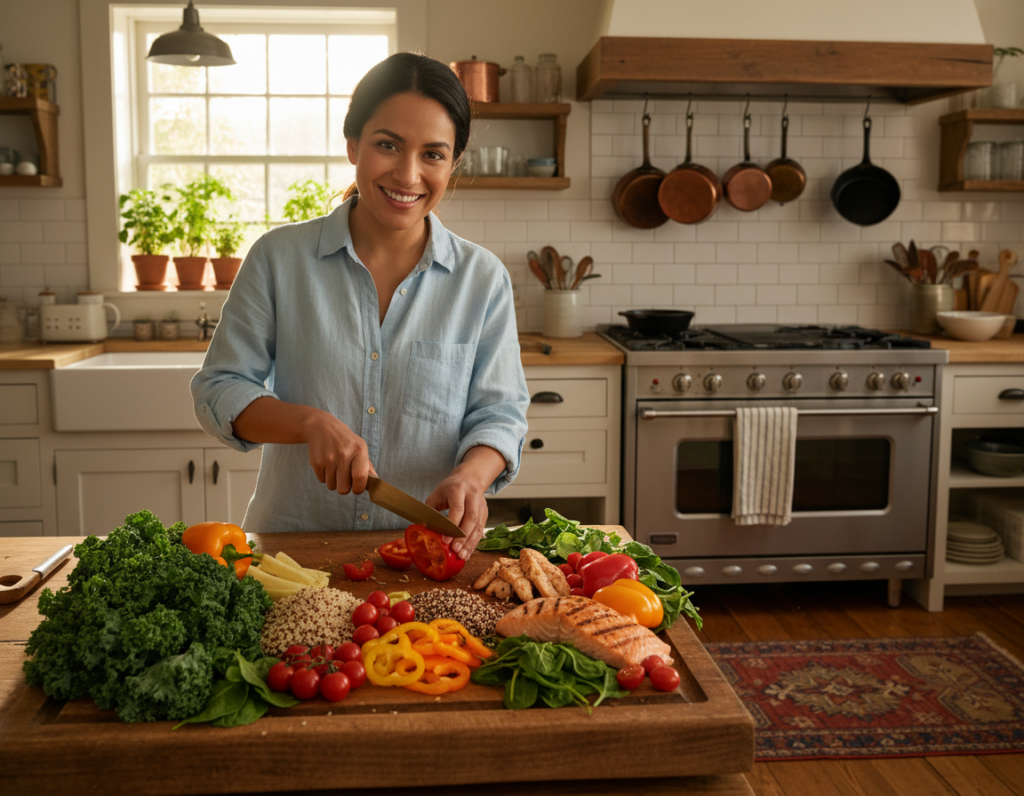
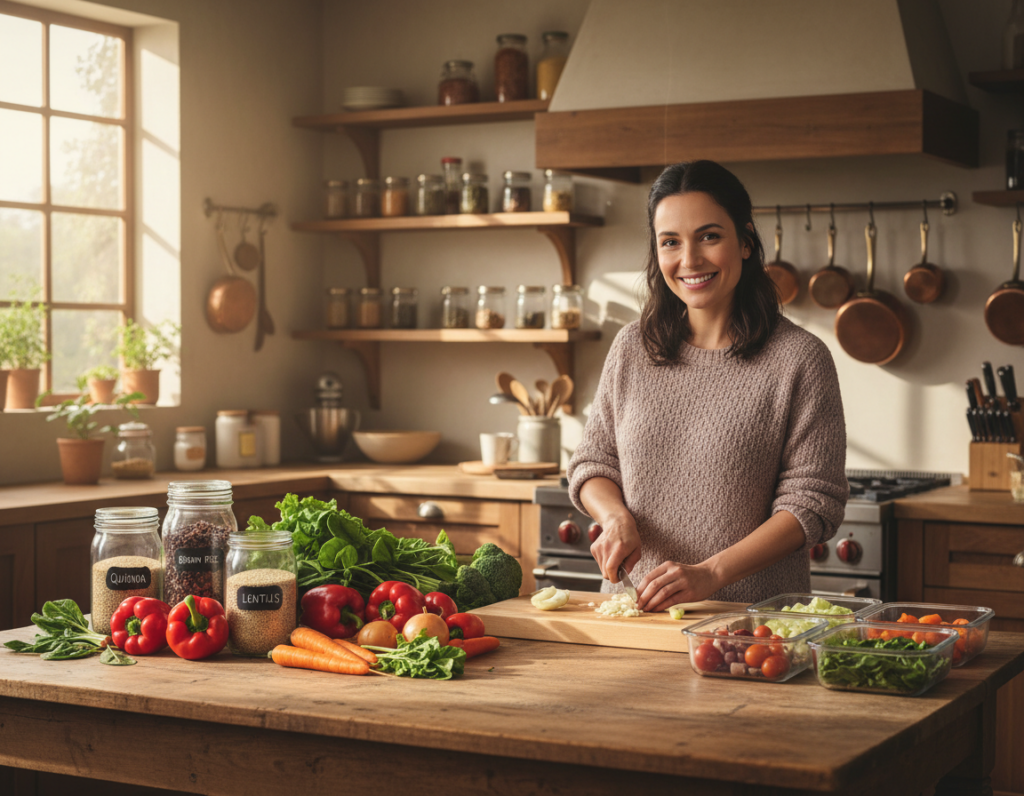
A single batch session at the start of your week makes weekday meals flow with less fuss. Chop a lot of base aromatics and you only wash the board and knife once.
Core chop list:
- Onions — diced and sliced for different uses.
- Garlic — minced and whole cloves for quick sautés and roasts.
- Celery — diced for stews or sticks for snacks.
- Carrots — grated and chopped to speed cooking and add texture.
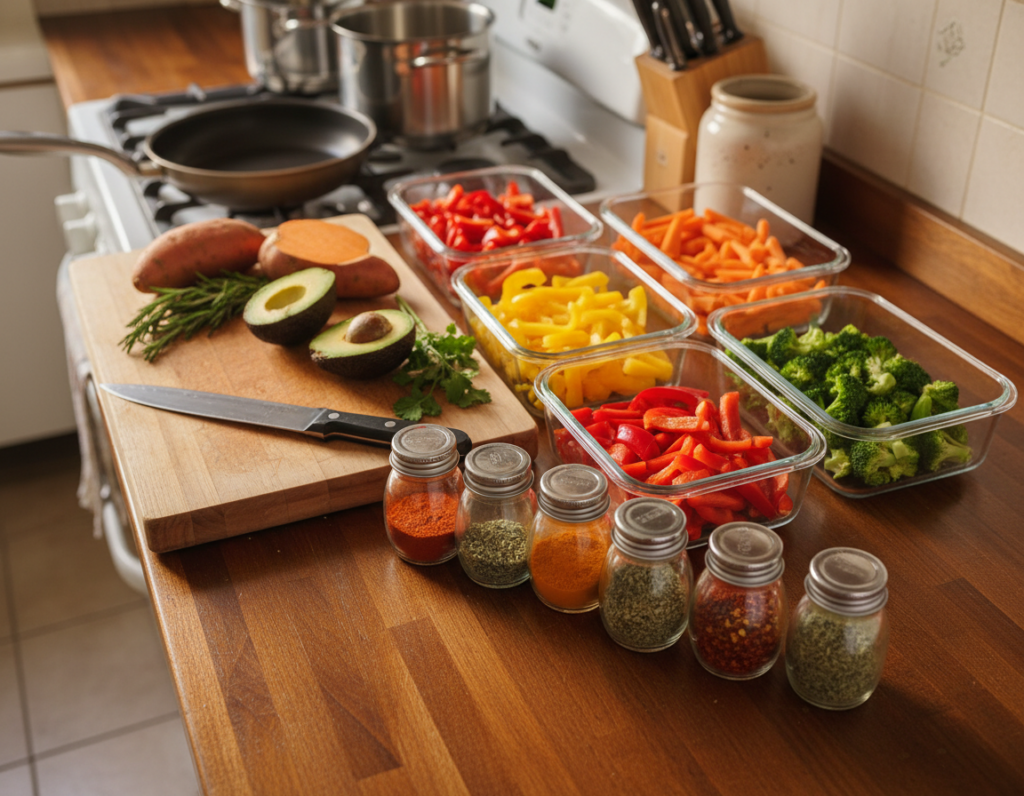
Wash and prep vegetables so they are ready to grab. Clean, cut produce gets used more often than whole, unwashed items.
Prep salad toppers (cucumbers, shredded carrots, sliced peppers) and soup add-ins (beans, cooked grains, chopped greens) in separate containers for fast lunches and bowls.
| Prep Item | Prepped Forms | Use Cases |
|---|---|---|
| Onion | diced, sliced | soups, sautés, salads |
| Garlic | minced, halved | sauces, marinades, roasted vegetables |
| Carrot | grated, diced | quick sautés, salads, soups |
| Salad/Soup add-ins | chopped cucumbers, beans, grains, greens | fast lunches, bowl builds |
Storage guidance: keep prepped items in airtight containers, label by day, and use within a few days for best quality.
Prep some ingredients in multiple cuts (dice some onions, slice others) so one session supports many recipes. One cutting board session also cuts cleanup compared with doing it every day.
Time saving cooking tips you can use tonight
Tonight’s goal: one pan, fewer moves, and a meal that mostly cooks itself.
Create one-pan meals to cut dishes and hands-on load
Sheet-pan dinners keep everything in one place. Roast chicken pieces with chopped potatoes and a splash of oil on one tray. Fewer pans mean less cleanup and one oven window to watch.
Make one-pot soups and stews that cook while you do other things
Sauté aromatics, add stock and vegetables, then simmer. A single pot can finish a stew while you tidy the kitchen or set the table. This approach multiplies leftovers and keeps the process simple.
Choose smaller cuts and smaller veggie pieces to cook faster
Smaller chunks of meat and diced vegetables reach doneness sooner. Thin slices or bite-size pieces reduce active minutes and help heat move through food quickly.
Grate vegetables for super-fast cooking and easy add-ins
Grated zucchini or carrots melt into sauces and skillets in just a few minutes. They boost nutrition and texture without extra chopping.
Keep knives sharp for faster, safer prep
A sharp knife slices with less force and slips less than a dull blade. That speeds prep, lowers the risk of injury, and makes smaller cuts effortless.
10-minute win: pick one of these approaches—one-pan, one-pot, smaller cuts, or grated veggies—and use it tonight to build confidence.
Lean on modern tools without overcomplicating your kitchen routine
A few well-chosen gadgets let you turn routine ingredients into finished dishes faster and with less fuss.
Use a pressure cooker, stand mixer, or stick blender for faster basics
Pressure cookers speed beans, shredded meats, and brothy meals in a fraction of conventional times. A stand mixer takes the elbow work from doughs and batters so you can focus on shaping and flavor.
A stick blender makes emulsions like mayonnaise in about 30 seconds and purees soups without extra pots.
Know when a gadget slows you down more than it helps
“Gadgets can slow you down when you factor in setup and washing.”
Use a tool only when it saves you end-to-end, including cleanup and storage. If grabbing a food processor means more rinsing than hand-chopping, skip it.
Practical rule: standardize a few reliable things—sheet pan, Dutch oven, and blender—to keep your routine simple and repeatable.
Build your week around quick meals that use everyday staples
Choose a few dependable 30-minute meals and let them anchor your weekly plan. A small, repeatable list reduces decision fatigue and helps the whole family jump into dinner without a lot of fuss.
Keep a short list of reliable 30-minute meals
Pick five dishes you know and like: tacos, bean bowls, spaghetti, stir-fries, and omelets. Rotate them so you rarely need a new recipe in the evening. When a meal is familiar, prep moves faster and fewer steps go wrong.
Make breakfast-for-dinner when time is tight
Eggs and omelets are a real weeknight lifeline. They cook quickly, please many palates, and pair well with toast or a simple salad for a balanced dinner.
Turn pantry staples into fast dinners
Lean on rice bowls, quick pasta nights, and fried rice made from leftover grains and vegetables. These pantry dinners let you combine a protein, veg, and sauce in minutes.
Habit tip: keep the list on the fridge or in a notes app so anyone can pick a meal and start. Pair each quick main with a no-stress side—bagged salad, frozen veg, or fruit—to keep dinner truly fast.
Choose quick-cook grains, noodles, and smart shortcuts for faster dinners
Picking fast-cook carbs is the easiest way to shorten a dinner without changing flavors. Target the slowest part of many meals—the carb—and swap in faster options to cut total minutes at the stove.
Smart quick-cook carb choices
Try express noodles like capellini (ready in about 3 minutes) or legume-based pasta (chickpea or red lentil) that cooks in 6–7 minutes and adds protein and fiber.
Fast grains and small potatoes
Parboiled rice heats faster than raw long-grain rice. Small potatoes, such as kipfler, roast or boil quicker and often need no peeling.
Quick-soak sides and the kettle trick
Couscous and some instant noodles finish by pouring boiling water over and letting them sit a few minutes. Boil water in an electric kettle—it often reaches boiling faster than a pot on the stove.
“Start the kettle, prep aromatics, then cook the pasta or rice while a skillet sauce comes together.”
| Shortcut | Example | Benefit |
|---|---|---|
| Thin pasta | Capellini | 3–4 minutes; fast finish |
| Parboiled grain | Parboiled rice | Shorter boil, reliable texture |
| Quick-soak | Couscous, instant noodles | No pot simmer; just steep |
Use prepared items strategically to save time without sacrificing nutrition
Keep a few smart, store-bought items on hand so you can build a wholesome meal in minutes.
Strategic prepared items are single-ingredient or low-ingredient products that speed assembly without relying on highly processed ready meals. They let you keep nutrition strong while shortening hands-on work.
Quick meal starters to keep in your pantry
Choose canned legumes, tomato-based sauces, and jarred salsas or simmer sauces. These ingredients blend with fresh or frozen produce to make real food fast.
“Shop-bought tomato-based sauce can be a healthy premade option close to homemade.”
Backup basics for busy weeks
Stock canned chicken, canned bone broth, and canned or frozen vegetables. With these, you can assemble soups and simple bowls with minimal prep.
| Prepared Item | Use | Benefit |
|---|---|---|
| Canned legumes (chickpeas, beans) | Soups, salads, bowls | Protein and fiber; ready to add |
| Tomato-based sauce | Pasta, stews, shakshuka | Flavor base close to homemade |
| Canned chicken & bone broth | Quick soups, grain bowls | Fast protein and stock without long simmer |
Example: heat canned chickpeas with tomato sauce and spinach, then serve over quick pasta or parboiled rice for a balanced dinner in one pan.
For meal prep resilience, keep these items stocked so planned prep misses don’t mean ordering takeout. Make sure to read labels: choose lower added sugar and sodium where possible, and pair prepared items with fresh or frozen produce to keep meals balanced.
Make the freezer your meal prep safety net
Treat the freezer as an active prep station that lets you build dinners in minutes. A clear routine here prevents last-minute takeout when long days stretch on.
Freeze cooked proteins for fast assembly
Cook extra ground beef, shredded chicken, or pulled pork and cool before portioning. Pack meal-sized bags so you can pull a protein for casseroles, enchiladas, soups, or bowls.
Keep frozen veggies and aromatics ready
Frozen veggies skip washing, peeling, and chopping. Many are flash-frozen at peak ripeness, which helps preserve nutrients and flavor.
Prep aromatics—mince garlic, onion, scallion, ginger, and chili after shopping and freeze in measured portions. Drop a cube or two straight into a pan to start flavor building.
Portion, label, and freeze leftovers intentionally
Label each pack with item, date, portion size, and intended use (tacos, soup base, pasta sauce). This makes meals truly heat-and-eat and reduces waste.
“Freeze cooked proteins and small portions right away so leftovers stay appealing.”
Cook once, eat twice with leftovers you’ll actually want to eat
A single well-made base can become multiple, different dinners and keep meals interesting all week.
Plan “remix” meals
Cook a versatile base—like a rich meat sauce—or roast a large chicken. Then plan a second dish that changes the flavor profile.
Example: turn leftover bolognese into chili by adding a can of beans, cumin, and chili powder. The dish tastes new with only a few minutes of hands-on work.
Schedule a leftover night
Pick one night each week to clear the fridge. Make it a family habit: plates of odds and ends become a shared, low-effort dinner.
Set a visible place in the fridge labeled “eat first” so food doesn’t get buried behind new groceries. This reduces waste and keeps lunches and snacks usable.
Roast once, repurpose all week
Roast a whole bird or a large joint of meat, then use cold slices in salads, warm shreds in tacos, and chopped meat in soups.
Roasted vegetables also reappear as salad toppings, sandwich fillings, or blended into a quick puree for bowls.
| Base | Remix idea | Best use |
|---|---|---|
| Roast chicken | Salad with greens and vinaigrette | Lunch or light dinner |
| Bolognese | Chili with beans and smoky spice | Hearty dinner or meal prep |
| Roasted vegetables | Wraps or blended soup | Quick weekday meals |
“Cook once, eat twice.”
Make it a system: routines that keep your kitchen running smoothly
Routines are the glue that keep a busy household kitchen organized and calm.
Keep a visible “what we can make” list on the fridge so anyone can scan options and start. RuthAnn Zimmerman of Pioneering Today pins a short list where her children can see what they can make with available ingredients.
Default to one-dish meals on your busiest day
Choose one day to rely on Dutch oven dinners, sheet-pan roasts, cast-iron skillet meals, or slow-cooker dump-and-go recipes. These formats cut active hands and reduce dishes dramatically.
Save cleanup by using fewer bowls and tools
Measure and prep over the sink or a lined cutting board. Try to reuse one prep bowl and avoid extra gadgets unless they save end-to-end work.
“I keep the list on the fridge so kids can pick a dinner and get hands on.”
Make sure to reset the kitchen each night: quick counter clear, start the dishwasher, and tuck away leftovers. Small systems like this add up into a lot of compound benefits over weeks, making it easier for people to help and for dinners to run smoothly.
| Routine | Why it helps | Example |
|---|---|---|
| Visible list | Reduces decision-making | Fridge meal list for family |
| One-dish default | Fewer dishes and hands-on minutes | Dutch oven stew or sheet-pan roast |
| Minimal-tool prep | Simplifies cleanup | Measure over sink; reuse one bowl |
Conclusion
,
Conclusion
Smart prep is the best way to save time and keep home meals satisfying. Plan recipes for the week, keep core ingredients on hand, and batch prep a few fundamentals.
High-leverage moves: choose one-pan or one-pot dinners, stock staples, and make a short weekly plan. These steps cut prep, cook, and cleanup without fuss.
Pick one change today — boil water in the kettle, swap to quicker rice or pasta, or build a small freezer backup — to create momentum.
Systems beat willpower. A short list, a steady shopping rhythm, and a few default dinners make evening food easier for the whole family over the week.