Save time and cut decision fatigue by prepping components that make healthy breakfasts, lunches, and dinners come together fast. This guide shows a realistic, repeatable system you can do in 1–2 hours on the weekend to speed up your week.
Start with a quick inventory, simple mix-and-match ideas, and a short shopping list. Then use one focused kitchen session to pre-cook proteins, cook a grain or two, roast a tray of vegetables, wash greens, and make one versatile sauce.
Who this is for: anyone in the United States who wants healthier meals, more variety, and less food waste. The steps include practical grocery tips and safe storage temps in °F.
Core promise: fewer last-minute decisions, more flexible evenings, and most weekday plates assembled in under five minutes because the hard work is already done.
Why Ingredient Prepping Beats Full Meal Prep on Busy Weeks
Prepping components instead of whole dishes lets you mix and match fresh ideas all week. This approach favors flexibility over repetition. When plans change, you can recombine cooked proteins, grains, and chopped veggies into new plates without starting from scratch.
Palate fatigue is real: eating the same dish all week quickly gets boring. With ready-to-use parts, the same roasted chicken becomes tacos, a salad topper, or a rice bowl—so flavor stays varied.
- Less stress: No last-minute decisions when you get home late or feel drained.
- Save time: Assembly is faster because elements are already cooked or chopped.
- Reduce waste: Visible, prepped food gets used before it spoils.
This system supports healthier choices and steadier portions without rigid menus. It also adapts to low-carb, gluten-free, or vegetarian styles because you prep components, not fixed dinners.
Try different ways to reuse one base: bowls, wraps, scrambles, pasta salads, or grain bowls. Small swaps in sauce or seasoning deliver big variety and keep the week interesting.
Plan Your Week: Inventory, Meal Ideas, and a Smart Shopping List
Map what you already have, then design a short, flexible list that makes weeknight dinners and quick lunches simple.
Fast kitchen inventory
Open the fridge drawers, glance through the freezer, and scan the pantry. Write down items that must be used this week.
This quick routine prevents waste and saves money by making the most of what’s on hand.
Build mix-and-match combos
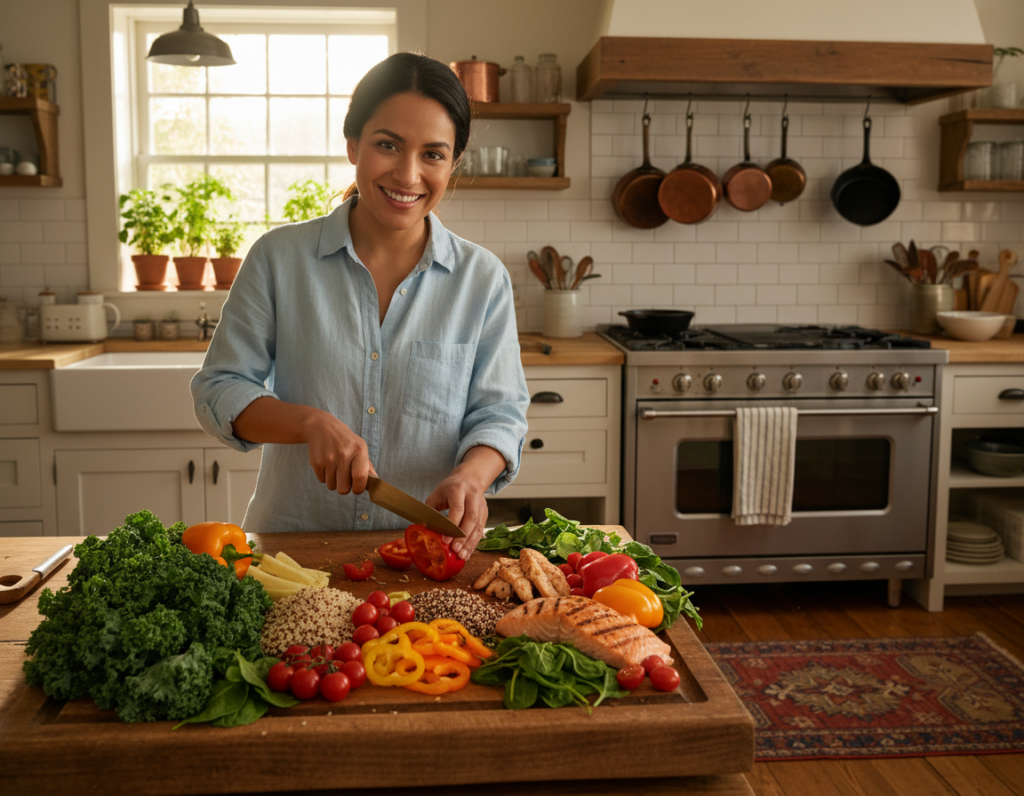
Choose 1–2 proteins, 1–2 grains like quinoa, 2–3 veggies, one green, and a bean option. These building blocks cover lunches and dinners.
Turn those blocks into bowls, wraps, stir-fries, salads, or quick soups so recipes stay flexible and reusable.
Convert ideas into a realistic list
Make a short prep list: what to cook, what to chop, what to wash, and what to leave whole for freshness. Slice avocados at serving time.
If you’re new, start small—plan 2–3 dinners and scale up once the system feels easy.
Smart U.S. shopping strategy
Watch weekly circulars and use coupons to stock up on shelf-stable staples like rice, pasta, lentils, and canned beans during sales. The goal is fewer extra trips and the right building blocks at hand.
How to Prep Meal Prep Ingredients Efficiently in One Session
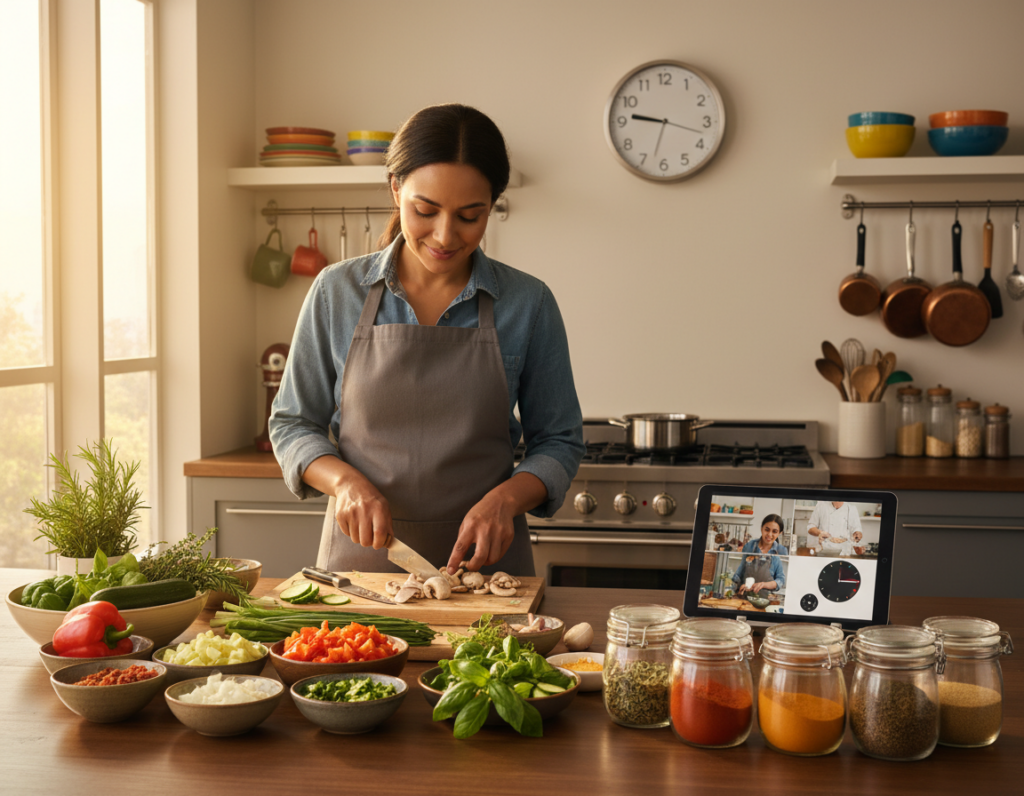
Work from the longest tasks first so the rest of the session flows without stops. Start by clearing counters, setting out sheet pans, knives, cutting boards, labels, and clear containers like Glasslock or Weck jars. This saves time in the kitchen and keeps rhythm steady.
Quick workflow to finish in 60–120 minutes
- Start proteins: roast chicken, brown ground beef, sear fish, or set a slow cooker with neutral seasoning so one batch fits many recipes.
- While proteins cook, boil rice or quinoa and roast potatoes so staples finish together.
- Wash greens, chop vegetables, and portion fruit for grab-and-go snacks.
Small add-ons speed assembly: hard-boiled eggs, rinsed beans, grated cheese, and toasted nuts cut build time later. Make one versatile sauce or vinaigrette to tie bowls and wraps together.
| Task | When | Time | Container |
|---|---|---|---|
| Proteins (chicken, tofu) | First | 30–45 min | Glasslock or Le Parfait jars |
| Grains (rice, quinoa) | Parallel | 15–30 min | Stackable containers |
| Produce & add-ons | While others cook | 10–20 min | Stasher bags, Weck jars |
Multitask in short pockets: chop while water boils, toast nuts while rice bakes, and label containers as things cool. Aim for an efficient, repeatable session and consult this concise meal prep guidance for extra tips.
Store and Freeze Prepped Ingredients Safely (and Keep Them Fresh Longer)
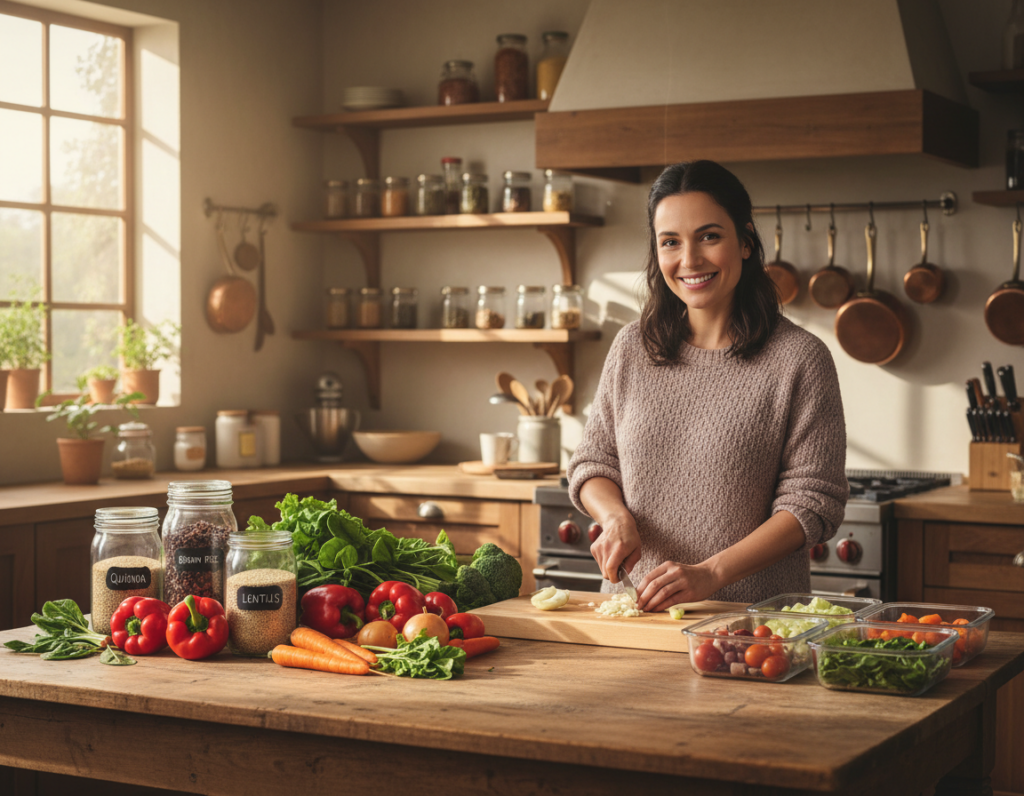
Smart storage preserves flavor and saves money. Use clear, stackable containers and label each one with the prep date so nothing gets lost in the fridge.
Visibility rule: keep prepped food where you can see it. Place the most perishable items at eye level and move older containers to the front when restocking.
Labeling and simple rotation
Write the prep date plus a “use by” date on each container. A small running list on the fridge works for busy weeks.
“Clear containers and honest dates cut waste fast.”
Produce care that extends life
Cover shredded or diced carrots with a damp paper towel to keep them crisp. Line containers for peppers and kale with lint-free paper towels to absorb excess moisture.
For herbs like parsley, soak the bunch in ice-cold water for about 15 minutes, dry well, then store between layers of paper towels in a container.
Fridge timelines at 40°F or below
Use these windows to prioritize what to eat first:
- Cooked ground poultry or beef: 1–2 days
- Cooked whole meats, fish, poultry, soups/stews: 3–4 days
- Cooked beans or hummus: 5 days
- Hard-boiled eggs and chopped vegetables (airtight): 1 week
- Opened soft cheese: up to 2 weeks; opened hard cheese: 5–6 weeks
Freezer best practices at 0°F or below
Many foods freeze well and save time later:
| Item | Freezer life | Tip | Use |
|---|---|---|---|
| Soups & stews | 2–3 months | Cool fully, use airtight containers | Reheat for quick dinners |
| Cooked beans | 2–3 months | Portion by cup for convenience | Add to bowls or salads |
| Cooked or ground meat/poultry | 3–6 months | Flash-freeze on tray, then bag | Thaw for quick protein |
| Blanched vegetables | 8–12 months | Blanch 3–5 minutes by type | Best for cooked dishes |
High-moisture foods like salad greens, tomatoes, and watermelon don’t freeze well. When in doubt, blanch vegetables; texture changes but they work fine in cooked recipes. For more on freezing tips, see our freezing guide.
Conclusion
Spend a little planning up front and you’ll cut stress all week with flexible, ready-to-use components.
Ingredient prepping is a practical alternative to rigid meal prep. It keeps variety high and boredom low while making healthy choices easier on busy days.
Repeat a simple weekly loop: quick inventory, cook a few staples, label with dates, and rotate older items forward. This habit keeps food visible and reduces waste.
Busy? Use short pockets of time instead of one long session. A minimum viable set—one protein, one grain, one tray of veggies, and one sauce—creates multiple meals without overcommitting.
Lean on frozen produce as a backup, then pick one day this week to try the system and tweak it next week based on what actually got used.