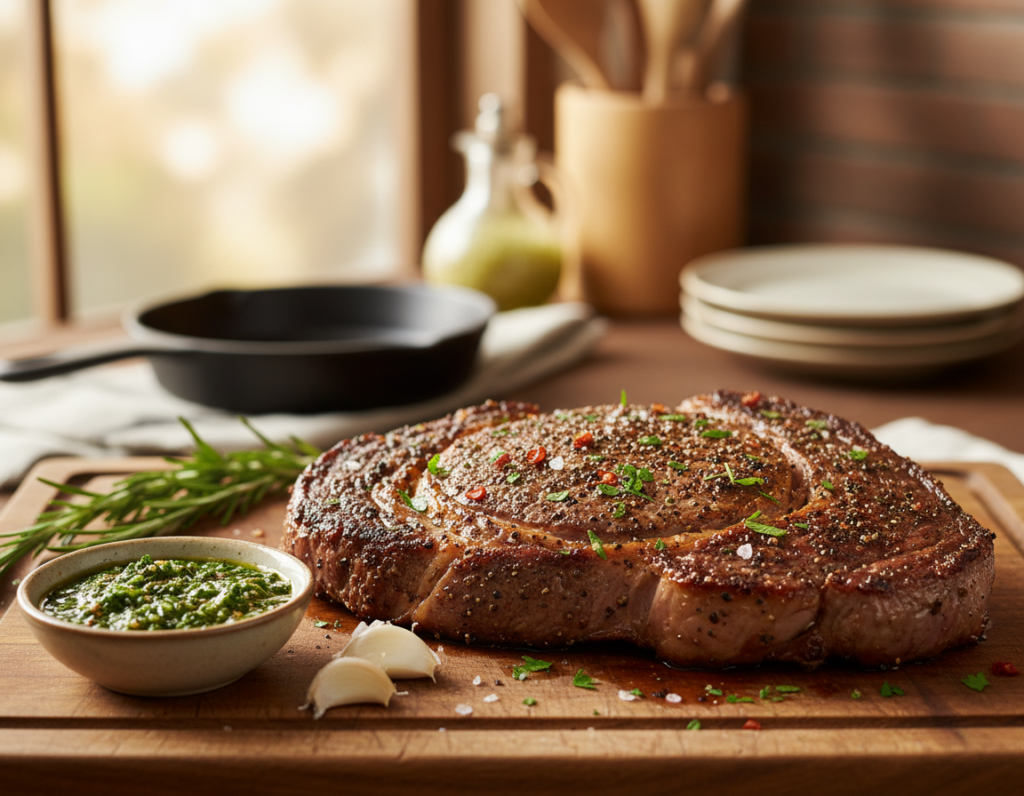
This short guide helps home cooks turn recipes into great meals by treating them as templates, not strict laws.
You will learn to taste, adjust, and trust your palate. A flat dish often needs a splash of lemon or vinegar to add brightness. Store-bought sauces and components vary, so final seasoning matters.
What to expect: practical steps on the basic tastes, heat and pungency, contrast techniques, and quick fixes from your pantry. The focus is hands-on testing and simple adjustments rather than theory.
Flavor is personal. What is perfect for one cook may need more salt, acid, or sweetness for another. Your taste guides every decision.
By the end, you should be able to diagnose what’s missing in a dish — salt, acid, sweetness, umami, or aroma — and fix it with confidence.
What “Balance” Means in a Flavor Profile
A thoughtful plate lets salt, acid, sweet, bitter, and umami work together.
In practice, a good flavor profile means no single taste overwhelms. Each element supports the others so the dish feels intentional and complete.
The five basic tastes
These tastes create the profile you aim for:
- Salt — gives structure and makes other notes pop.
- Sour — adds brightness and lift.
- Sweet — rounds edges and can tame harsh acid or heat.
- Bitter — adds complexity and a mature edge, used sparingly.
- Umami — provides savory depth; think mushrooms, aged cheese, soy and fermented condiments.
Heat and pungency
Pungent spice changes perception. Heat intensifies a dish and often needs counterpoints like acid or a touch of sugar.
Use contrast for more depth
Contrast prevents monotony. Rich sauces benefit from acidity. Spicy dishes often improve with a hint of sweetness.
One example: a creamy stew tastes brighter with a squeeze of lemon or a teaspoon of sugar to round the edges. This shows how you test and adjust to find balance flavors by tasting in small steps.
How to Taste and Adjust Balanced Cooking Flavors While You Cook
A quick, focused taste test during cooking saves effort and keeps results consistent. Treat any recipe as a starting point. Ingredients and brands vary, so your palate finishes the job.
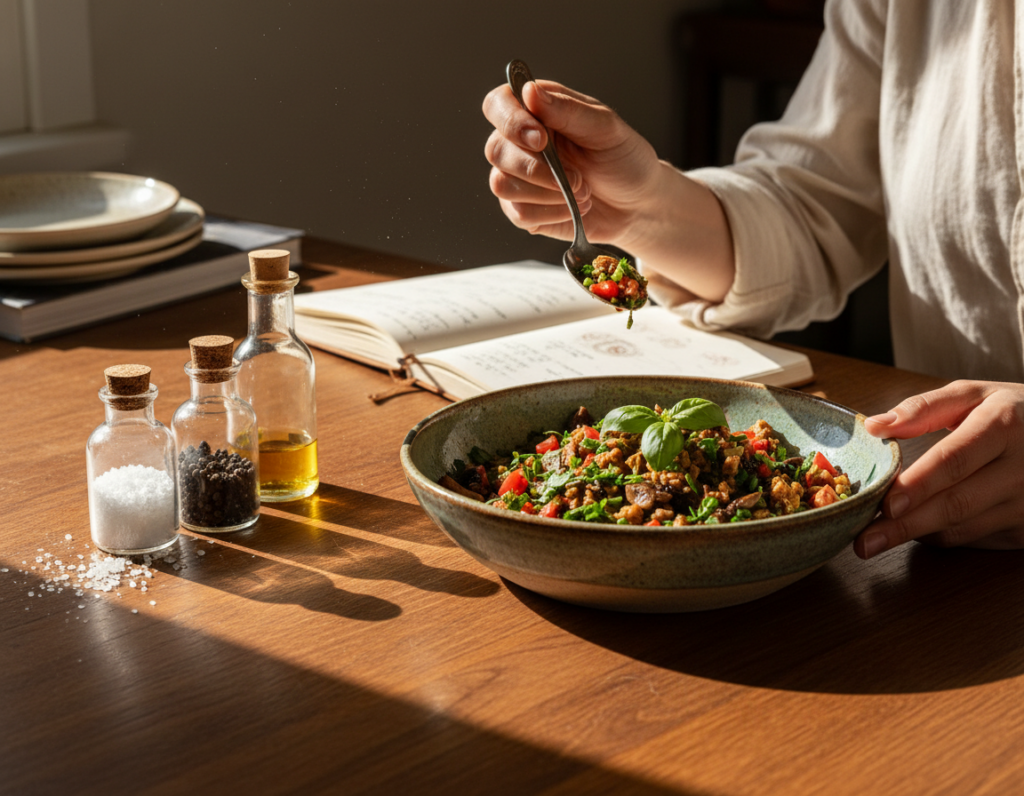
Treat recipes as templates
Use the recipe for proportions, not final seasoning. Pause and taste the dish as it nears service. Note what it lacks: salt, acid, sweetness, umami, or aroma.
Season gradually
Add small pinches or splashes, stir, wait a short time, then taste again. This avoids over-salting or oversweetening and keeps adjustments predictable.
Build in layers and finish strong
Add foundation ingredients early: salt in stages, dried herbs and spices to bloom. Save citrus, delicate herbs, and finishing oil for the last minute.
Right before plating, do a final taste and make a targeted tweak—often a splash of acid, a pinch of salt, or a burst of pungency to wake a flat sauce.
Serve at the right temperature
Taste the dish at serving heat. Heat amplifies flavor; cold mutes it. Leftovers often need a fresh season to read well.
Quick diagnostics
- Bland → salt or umami.
- Too sour → a touch of sweetness.
- Too salty → dilute or add small sweet/acid balance.
- Too bitter → salt, sweet, or acid to tame it.
- Too spicy → sweet or sour, or a cooling dairy element.
Tip: Pause, name what’s missing, then change only one thing at a time. These simple steps build your confidence and deliver reliably balanced dishes every time.
Ingredients That Fix (or Enhance) Taste Fast
Keep a short list of high-impact ingredients so you can rescue a dish in minutes. This “fast fix pantry” saves time and avoids restarting a recipe.
Acidity wakes up heavy or dull sauces. Use a small splash of lemon juice for fresh citrus lift, or vinegar when you want sharper tang. Even a teaspoon can increase liveliness by stimulating saliva and making foods more mouthwatering.
Salt and umami for depth
Add soy sauce, Worcestershire, miso, or Parmigiano-Reggiano to deepen savoriness. These umami boosters also add salt, so taste as you go.
Sweetness to balance
A pinch of sugar, a drop of honey, or a tad of maple syrup softens excess sourness or heat. Use tiny amounts and retaste; sweetness is a subtle corrective tool.
Managing bitterness
If coffee-like notes or dark chocolate feel too sharp, tame bitterness with a little salt, a hint of sugar, or a splash of acid depending on the direction you want.
Pungency and aromatics
Finish with freshly ground pepper, a dab of mustard, or a touch of wasabi for snap without overwhelming the dish. Add dried spices early to bloom; add fresh herbs at the end for best aroma.
- One change at a time: test acid, then salt/umami, then sweet, then bitter control, then pungency, then aromatics.
- Fast fix pantry: lemon juice, vinegar, soy sauce, miso, Parmesan, sugar, honey, pepper, mustard, fresh herbs.
Go Beyond Taste: Texture and Cuisine-Based Balance
Texture and cultural templates lift a meal from good to memorable. The way a dish feels changes how the same seasoning reads on the palate. Use mouthfeel as an extra lever when you taste and adjust.
Practical texture pairings
Add crunchy elements to soft dishes to increase contrast. For example, sprinkle toasted nuts or crispy breadcrumbs over creamy soups.
Pair soft grains with crisp vegetables. Use raw slaws, quick-pickles, or pan-roasted greens to add snap to rich sauces.
Cuisine templates that simplify choices
Borrow entire cuisine profiles instead of guessing. Thai templates mix sweet, sour, salty, and spicy elements for instant coherence.
- Thai example: coconut milk or a touch of sugar for sweetness, fish sauce for umami, curry paste for spice and herbs, and lime juice for sour finish.
- Indian approach: toast and bloom spices early for depth, then finish with fresh herbs or a squeeze of acid to add complexity.
Tip: Treat these profiles as flexible guides. Taste, diagnose, and adjust—but now include texture and cuisine frameworks to improve overall experience.
Conclusion
The most reliable way to improve a meal is to taste at service temperature and adjust in tiny steps. This turns seasoning into a repeatable skill you can refine.
Start by naming what the dish lacks — salt, acid, sweet, umami, or aroma — then make one small change and taste again.
Finish with a targeted tweak: a dash of salt, a splash of lemon or vinegar, or fresh herbs. Try quick fixes like soy, miso, cheese, or a pinch of sugar to add depth.
Trust your palate: your ideal profile may be tangier, spicier, or more savory. For more on the science behind these choices, see the science of flavor balance.