Goal: This guide teaches a repeatable technique for fluffy, tender grains that suit any meal. You will learn stove, oven, and microwave methods, with the stove offering the most consistent results for small batches.
Core concept: control the grain-to-water ratio, bring to a gentle boil, lower heat to a calm simmer, keep the pot sealed, and rest the grains before fluffing. These simple levers make results predictable across pots and burners.
Expectations matter. The ideal texture depends on the variety, exact ratio, minutes on heat, and a covered rest. Common problems — mushy, hard, scorched, or uneven results — often come from wrong amounts, lost steam, or skipping the rest.
Promise: this section sets up practical steps you can repeat with any measuring system, not a single rigid recipe. Adjust water, manage low heat, discipline the lid, and allow a proper rest for consistent texture every time.
Why Rice Texture Matters for Flavor, Serving, and Recipes
Texture is the silent chef that changes flavor and function on the plate. It affects how a dish tastes and how it is eaten. Fluffy grains feel light and clean in the mouth. Sticky servings feel richer and hold sauces better.
Fluffy vs. sticky and what “perfect” really means
Sticky means grains cling together for easy picking with chopsticks or shaping. Gummy means excess surface starch and soggy mouthfeel. Aim for cling without glue.
How grain length affects texture
Long grain types generally stay separate. Medium grain sits between separate and clingy. Short grain naturally produces more cling, which helps sushi and many Asian dishes.
“Perfect means the texture your recipe intends — firm-tender for stir-fries, softer for stews, stickier for shaping.”
- Fluffy: best for pilafs and many American-style sides.
- Sticky: best for bowls, chopstick use, or shaped servings.
- Choose the right grain and method to prevent mid-cook guessing and frustration.
Choose the Right Rice for the Dish
Choosing the right grain shapes texture, flavor, and what utensils work best. Match grain choice with your meal goal and the rest—ratio, lid, rest—becomes straightforward.
Long grain white rice for separate, fluffy grains
Long grain and long grain white types keep pearls distinct. They pair well with stews, grilled meats, and stir-fries where you want separate grains rather than a paste.
Short grain white rice for naturally stickier results
Short grain clumps more because of surface starch. That makes it ideal for bowls, chopstick-friendly plates, and dishes that benefit from cohesion.
When to use basmati, jasmine, brown rice, and wild rice
Basmati and jasmine are aromatic but need slight ratio and timing tweaks. Brown rice and wild rice need more water and time; adjust minutes or expect firmer centers.
Specialty rices that need distinct methods
- Sushi rice uses a unique ratio and seasoning for intentional stickiness.
- Risotto rice calls for gradual liquid and stirring.
- Paella rice is finished in a pan for a specific bite and crust.
“Once the right grain is chosen, simple rules—ratio, pot, lid, rest—do most of the work.”
| Grain | Texture | Quick tip |
|---|---|---|
| Long grain white | Separate, fluffy | Use standard stovetop ratio for best results |
| Short grain white | Clingy, cohesive | Rinse lightly for less surface starch |
| Basmati / Jasmine | Aromatic, delicate | Tweak water slightly; mind timing |
| Brown / Wild rice | Chewy, hearty | Increase water and extend cooking time |
Note: A rice cooker is helpful but optional. Apply the right ratios and steam control from this guide and any pot will work.
Essential Tools for Foolproof Rice Cooking
Choose an appropriately sized pot. For a single 1-cup portion, a medium saucepan is ideal. A pot that’s too large speeds evaporation and can scorch the base. That loss of water makes the final texture uneven.
A tight-fitting lid is non-negotiable. Trapped steam finishes the grains evenly without constant checking. A snug lid also means you rarely need to stir, which prevents excess surface starch from making the result gluey.
- Measuring with any cups works: consistent cups matter more than branded tools. Keep the same ratio and you’ll get repeatability.
- Microwave note: use a tall container to prevent boil-over and allow room for rising liquid.
- Practical tip: if your lid is light and you see boil-overs, lower the heat and try a small water adjustment next time.
Remember: steady heat-holding tools help you nail minutes and the method without second-guessing.
Rice-to-Water Ratio Basics for Consistent Results
Getting the water proportion right is the fastest way to predictable, even grains. Use the guidance below as your starting point and treat the values as a control that you can tweak by tablespoons for texture.
Stovetop baseline
The reliable stovetop ratio for white rice is 1 cup rice to 1.5 cups water. This setting aims for fluffy, separated grains rather than a soft, mushy result.
Microwave adjustment
Many microwave setups need more liquid. Try 1 cup rice to 2 cups water because hot spots and vigorous bubbling can lose moisture and undercook the center.
Rinsing and fine tuning
If you rinse rice, subtract 2 tablespoons of water per cup. Small changes—1–2 tablespoons—make rice firmer or softer without changing cooking minutes.
Boiling water before adding the pot to an oven or placing in the microwave improves evenness without altering the basic ratio logic.
| Method | Ratio (rice:water) | Adjustment note |
|---|---|---|
| Stovetop | 1 : 1.5 | Targets fluffy grains |
| Microwave | 1 : 2 | Compensates for moisture loss |
| Rinsed grain | Subtract 2 tbsp per cup | Accounts for surface water |
Tip: The most common cause of mushy results is excess water, especially when grains were rinsed and the extra liquid wasn’t reduced.
Rinse Rice or Not? What Actually Changes
A quick rinse can change surface starch behavior and the final bite of your grains.
What rinsing does: Swishing removes dusty surface starch, lessens foaming, and can prevent excess thickening in richer liquids. This is useful when working with heavy broths or coconut mixes.
When rinsing helps most
If you buy in bulk or worry about grit, rinse rice before cooking. Rinsing also benefits dishes with thick sauces or spice-heavy liquids where extra surface starch would gum the pan.
When rinsing isn’t necessary
If you follow the right rice-to-water ratio and keep the lid sealed, texture control comes more from technique than from chasing clear rinse water. You can achieve fluffy rice without rinsing by managing ratio, heat, and rest.
Simple, effective rinse method
Place rice in a bowl, add water, swirl with your hand, pour off cloudy water. Repeat until the water is less cloudy—expect some haze. If you rinse, reduce cooking water by 2 tablespoons per cup to avoid overly soft results.
Choose: skip rinsing for simplicity and focus on ratio and lid discipline, or rinse and adjust the math for clean, predictable texture.
How to Cook Rice on the Stove for the Best Texture Every Time
A clear stovetop routine gives the most repeatable plate of grains you’ll make all week. Place measured rice and water in a medium pot and bring to a gentle boil — not a rolling one — so you avoid boil-overs and uneven evaporation.
Turn heat down and seal the pot
When the surface shows gentle bubbles, turn heat down to heat low and cover with a tight lid. Cook without stirring or lifting the lid for about 13–15 minutes; different stoves shift the exact minutes.
Check absorption and rest
At the end of the simmer window, quickly tilt the pot to confirm no pooled water remains. If water is gone, remove from heat and let the pot rest, covered, for ~10 minutes so trapped steam finishes the grains.
Fluff gently
Use a fork or rice paddle to fluff rice by lifting and separating grains. Do not mash. This preserves texture and prevents clumps from turning gummy.
“Don’t peek — each lid lift steals steam and can create uneven doneness.”
For more tips on ratios and alternate methods, see this practical guide.
Timing and Heat Control: Minutes, Simmer, and Rest
Timing and steady flame are the practical levers that decide whether grains finish tender or firm. On most stoves the typical simmer window for white rice runs about 13–18 minutes. Burner strength, pot thickness, and the seal of your lid change the exact minutes required.
Why steady heat matters
Keep heat low enough to avoid an aggressive boil. Too much heat causes boil-over and uneven evaporation. Too little heat fails to sustain steam and can leave hard centers.
No peeking: a technical requirement
Lifting the lid lets steam escape and interrupts even cooking. Steam loss reduces internal temperature and can make the core underdone. Treat lid removal as a last resort.
Resting and final texture
After the simmer, rest the pot for 5–10 minutes, covered. This quiet time redistributes water, firms grain structure, and finishes steaming without extra heat.
Altitude and practical notes
At higher elevation add about 1 minute of cook time per 1,000 ft and consider a tiny water tweak. Keep a simple log: if a batch is slightly firm or too soft, change water by tablespoons next time rather than overhauling the whole method.
Oven Method for Big Batch Rice Cooking
When feeding a crowd, an oven makes batch rice steady and virtually maintenance-free. This method scales well and frees a burner for other tasks.
Why the oven is best for large batches
Use a covered casserole or Dutch oven so steam stays trapped. The enclosed space acts like a giant steamer and keeps texture even across many servings.
Why boiling water matters
Pour boiling water over measured grain and salt. Using boiling water removes the oven warm-up lag and reduces uneven cooking between center and edges.
Practical timing, vessel size, and edge care
Bake at about 390°F for ~35 minutes, then rest covered for 10 minutes before fluffing. Avoid very small batches in a wide dish—thin spreads can dry and form crispy edges. Aim for at least ~2 cups of raw rice in a properly sized pot or casserole.
“This hands-off method shines for meal prep, parties, and weeknight planning when you want consistent results without babysitting.”
Microwave Method for Fast, Convenient Rice
Short on stove space? The microwave can deliver fluffy results with a few precise steps.
Choosing the right container height
Pick a tall, microwave-safe round container. Aim for a bowl at least three times the water level. That height prevents boil-over and gives room for rising bubbles.
Why boiling water improves texture
Pouring boiling water over measured grain reduces the outside-in cooking gap. It shortens time spent in lukewarm water and helps the center finish evenly.
Timing, lid use, and resting
Microwave uncovered for about 12 minutes on medium-high to avoid pressure build-up. Then cover and let the pot rest for roughly 10 minutes.
Rest-and-fluff technique
Resting locks steam in and calms surface moisture. After the wait, gently fluff with a fork to separate kernels. Use light lifts rather than stirring hard to avoid gummy results.
- When it’s the best way: fastest and convenient if the stovetop is busy or you need a single portion.
- Troubleshoot: if your microwave is stronger or weaker, change the minutes by small increments instead of adding extra water.
| Step | Action | Notes |
|---|---|---|
| Container | Use tall, round bowl | Height 3x water level prevents overflow |
| Liquid | Use boiling water | Improves evenness and shortens soak time |
| Cook | Microwave uncovered ~12 minutes | Medium-high power to avoid pressure |
| Finish | Cover and rest 10 minutes; fluff with fork | Rest completes steaming; fork keeps grains separate |
Common Mistakes That Ruin Rice Texture
A single misstep in liquid or heat often turns an expected batch of grains into a gluey mess. That outcome usually traces back to a few repeatable errors you can avoid.
Too much water and gummy grains
Using excess water is the top failure point. Extra liquid over-hydrates kernels and leaves a tacky surface that feels mushy. Many recipes list a 2:1 ratio for stovetop, which often makes this exact problem worse.
Aggressive boil and lost steam
An angry boil foams and pushes starchy bubbles under the lid. That eruption both wastes water and breaks the steady steam cycle. High heat also increases the chance of boil-overs and uneven doneness.
Stirring and released starch
Stirring during cooking agitates grains and frees starch into the liquid. That transformed liquid becomes a paste that coats kernels, producing sticky clumps instead of separate bites.
Skipping the rest step
Rest is not optional. A short rest lets residual moisture redistribute so the top is not wet and the center not underdone. Without it, texture ends up uneven.
- Simple rule: correct ratio, gentle boil, low heat, no stirring, no peeking with the lid, and a proper rest before fluffing.
Troubleshooting: Fix Rice That’s Burnt, Hard, Wet, or Uneven
Start by matching the problem — burnt base, hard centers, wet surface, or clumps — with a direct fix. A quick diagnosis saves a pot and keeps meals on schedule.
Quick diagnosis framework
- Scorched base: dark bits on the bottom, bitter smell.
- Undercooked center: firm or chalky grains when tasted.
- Too wet: pooling or glossy surface after rest.
- Clumping: sticky mass rather than separate pearls.
Scorched base
Cause: heat too high or a pot that’s too wide for the amount. Liquid can evaporate faster than the rest of the batch finishes.
Fix: Transfer undamaged grains to a clean vessel. For next batches, use a heavier, correctly sized pot and lower the heat. Move the pan to a smaller burner if the flame is too strong.
Undercooked center
Add about 1/4 cup water per 1 cup of raw grain used, cover, and steam for roughly 5 minutes. Then rest covered for a few minutes so trapped steam evens out the texture.
Too wet or glossy
Spread the contents in a wide pan and heat gently, uncovered, over low heat until excess water evaporates. Avoid vigorous stirring that breaks grains.
Too firm for your taste
Adjust the next batch by adding 1–2 tablespoons more water while keeping the same method and minutes. Small tweaks preserve consistency without overcorrecting.
Clumpy grains
Let the pot rest. Then use a fork or paddle and lift gently, separating kernels with light strokes so you can fluff rice without mashing starch into a paste.
“Match the symptom to the fix: small, measured steps rescue most problems in minutes.”
Flavor Upgrades That Keep the Texture Right
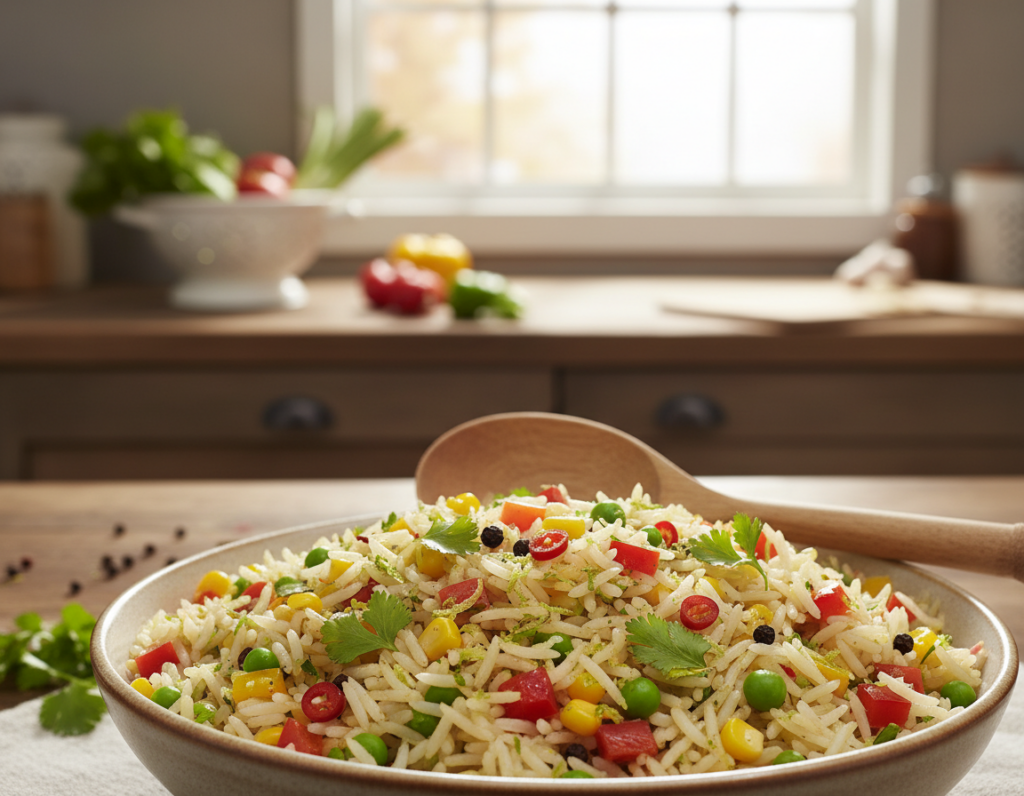
Seasoning the cooking liquid gives depth while leaving texture controls intact. Small swaps—salt, a pat of butter, or broth for water—add flavor without changing the basic ratio, lid, and rest that produce consistent results.
Salt, butter, and savory swaps
Salt is the simplest baseline seasoning. Add it to the measured liquid so seasoning is even.
Butter or oil adds richness; a tablespoon prevents clumping and improves mouthfeel without extra steps.
Broth is an easy swap for water when a savory boost is wanted. Keep the same method and watch for sodium levels.
Aromatics and spices that work well
- Whole spices or bay leaf: add at the start and remove after resting.
- Ground spices (cumin, turmeric): a small pinch blends into the steaming liquid.
- Fresh aromatics (garlic, ginger, scallion, dill): tuck them in the pot; avoid stirring mid-cook.
Richer liquids like coconut milk
Thicker liquids change evaporation and starch behavior. If using coconut milk blends, consider a light rinse and reduce liquid slightly. That prevents gummy results and keeps grains tender.
If a flavored batch ends up too soft, cut a tablespoon of liquid next time rather than changing the whole recipe.
Storing, Freezing, and Reheating Rice Safely
Store leftovers promptly so safety and texture stay intact. After cooking, cool the batch quickly, then transfer cooled portions into an airtight container and place in the refrigerator.
Refrigerator window and basic rules
Keep cooked rice in the fridge for about 4 days as a cautious standard. Use sealed containers and label with the date. This reduces spoilage and keeps grain texture reliable.
Freezing for meal prep
Portion rice into freezer bags or small containers and freeze in usable amounts. Frozen portions keep well for about 3–4 months and speed weeknight dinner prep.
Best reheating method
Add a little water—about 2 teaspoons per cup of cooked rice—cover, and heat in short bursts in the microwave for roughly 1 minute. The added water recreates steam and softens the grains without drying them out.
Why cold rice works for fried dishes
Chilled rice dries slightly and separates, which helps prevent a mushy stir-fry. This tip applies whether the batch came from a stovetop, oven, microwave, or rice cooker.
“Cool fast, seal tight, and reheat with a splash of water — small steps that protect flavor and safety.”
| Storage | Time | Practical tip |
|---|---|---|
| Refrigerator | ~4 days | Cool promptly; use airtight container |
| Freezer | 3–4 months | Portion before freezing for easy thawing |
| Reheat | Short minutes | Add ~2 tsp water per cup; cover while heating |
Conclusion
Consistency comes from a short checklist you can run without thinking: select the right grain, measure accurately, and stick with a steady ratio. These small habits remove guesswork and make results repeatable.
Control the process: bring the pot to a gentle boil, drop to a low simmer, keep the lid closed, and resist stirring or lifting. After cooking, rest covered, then fluff gently to finish.
Make tiny changes—an extra tablespoon of water or a minute more—until your setup matches your stove and pan. Choose the method that fits the meal: stovetop for best texture, oven for large batches, microwave for speed.
Next step: consult the troubleshooting notes when a batch is off and keep brief logs so each attempt gets closer to your ideal grains.