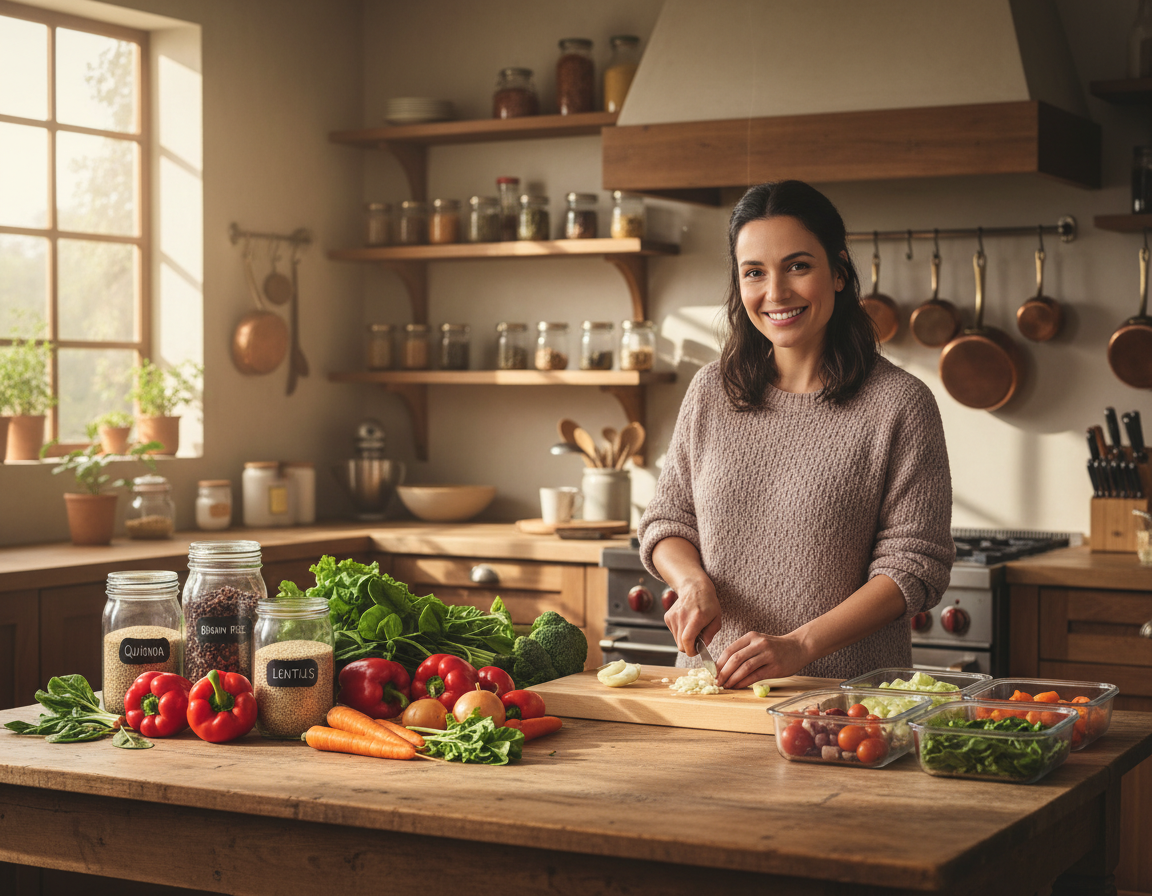
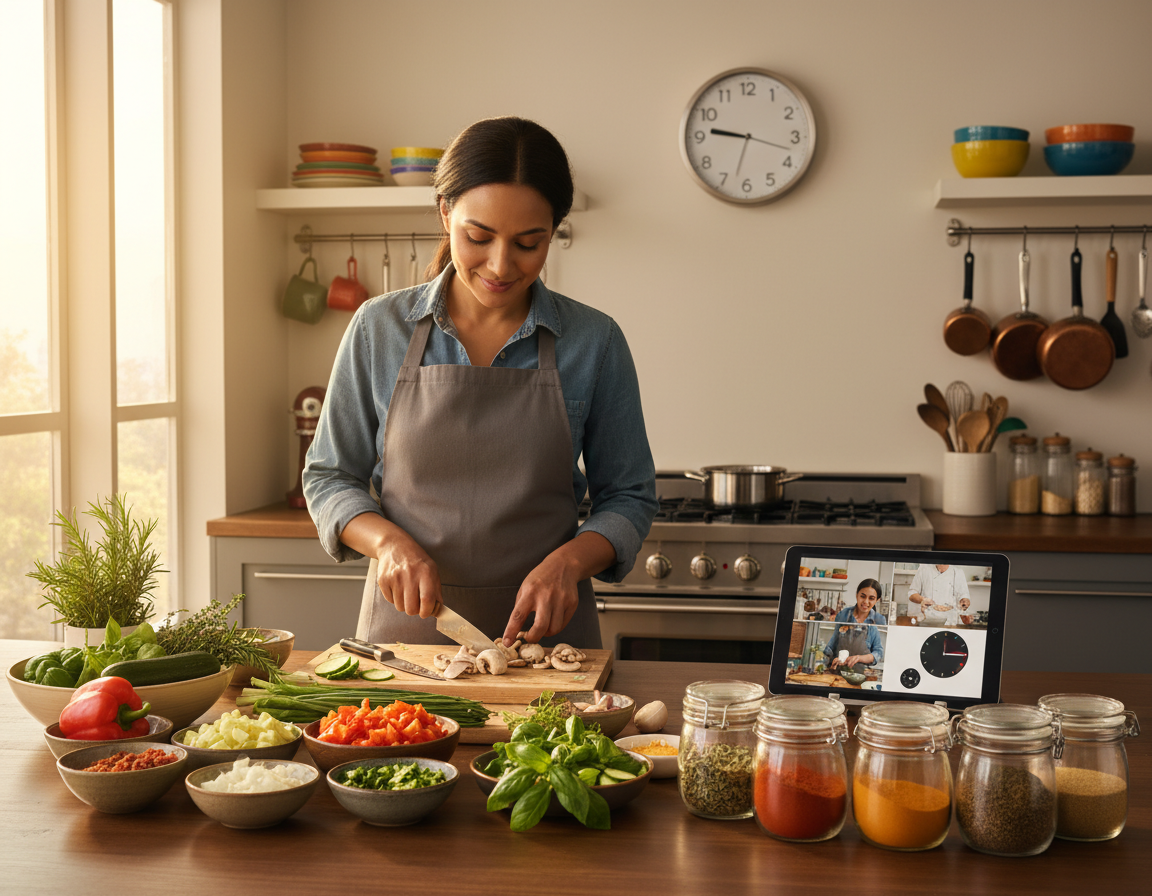
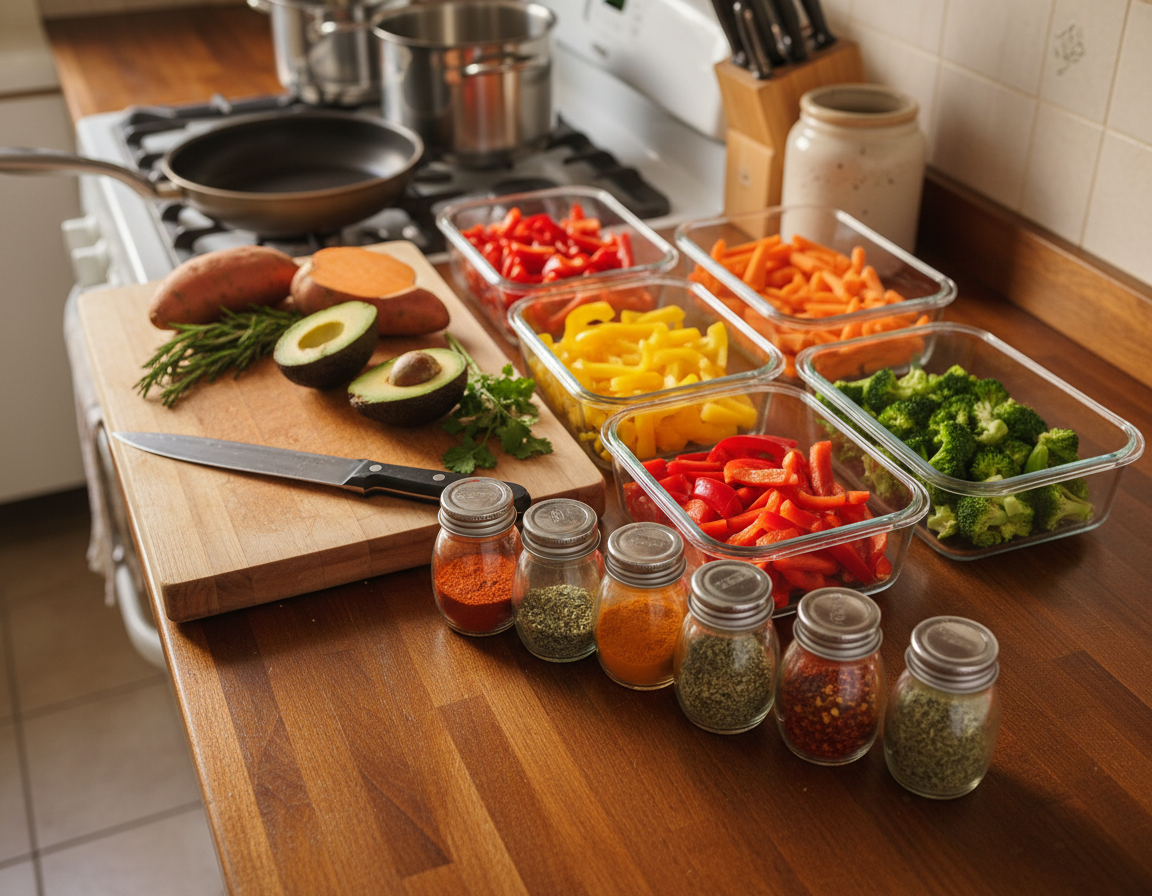
This short guide shows how simple, repeatable steps can help you plan and prep real food for busy weeks.
We cover practical balanced meal preparation using whole grains, fruits and vegetables, lean protein, and healthy fats. The goal is to prep components you mix into breakfast, lunch, and dinner so cooking stays easy.
Expect simple strategies, not fancy recipes. Component prep — grains, roasted veggies, proteins, and sauces — lets you remix items for variety. I’ll share meal prep ideas and prep ideas that work with pantry and freezer staples like beans, eggs, yogurt, and frozen veg.
This piece is for busy people who want healthy meal prep that saves time and cuts decision fatigue. First we’ll define a sensible approach to a balanced diet, then build a weekly framework, stock the kitchen, and show how to plug components into quick meals.
Note: nutrition needs vary. If you have medical conditions, consider advice from a registered dietitian for personalized targets.
What “Balanced” Means for Real-Life Meal Prep
Think of a practical plate you can build every day with four repeatable parts. This approach makes meal planning fast and predictable for any schedule.
The core building blocks
Split each plate into: protein, fiber-rich complex carbs, healthy fats, and colorful produce for volume and micronutrients.
How the formula shifts by person
Higher activity? Add more carbs around training. Need longer fullness in the morning? Boost protein at breakfast. Sensitive stomach? Choose gentler fiber sources like cooked veg and oats.
Quick plate method to portion fast
Visually: half your plate non-starchy vegetables, one-quarter protein, one-quarter complex carbs, plus a small drizzle or portion of healthy fats.
- Pre-cook each “bucket” (grains, proteins, roasted veg, sauces) so you can assemble a balanced lunch or dinner in minutes any day.
- Snacks are optional; pair protein + fiber + fat to keep energy steady between meals.
- If you have medical needs, consult a registered dietitian or healthcare provider before big changes.
| Component | Quick examples | When to adjust |
|---|---|---|
| Protein | Chicken, beans, eggs, tofu | More for strength training or hunger control |
| Fiber/Complex carbs | Brown rice, oats, quinoa, potatoes | More around workouts; gentler when stomach is sensitive |
| Produce + Healthy fats | Leafy greens, colorful veg, avocado, olive oil | Increase veg for volume; add fats for satiety |
Balanced Meal Preparation Basics: A Simple Framework You Can Repeat
Pick one reliable system and stick with it for a few weeks. That helps you learn what works and saves time on grocery runs and cooking.
Pick your prep style
Full recipes mean batch-cooking whole meals to reheat. Pros: less thinking each night, good for busy weeks. Cons: less variety if you repeat the same dishes.
Mix-and-match components (grains, proteins, sauces) let you combine items into different meals. Pros: more variety and flexibility. Cons: takes slightly more planning up front.
Choose a weekly rhythm
One long session on Sunday works if you have a big block of time. Two shorter sessions (Sunday + Wednesday) help you refresh fresh produce. “Mini-prep” each night works if you prefer low upfront time.
Create a short shopping list
Pick 3–5 go-to foods: one breakfast base, two lunch options, two dinners, plus snacks. Build a short shopping list from those choices to streamline meal planning and avoid impulse buys.
Shop strategically to save time and money
Buy versatile staples, choose frozen produce when helpful, and plan cross-use ingredients like greens for salads and wraps. Expect that good prep takes time up front but pays back in faster weekday cooking and fewer takeout decisions.
| Category | Examples | How it helps |
|---|---|---|
| Protein | Chicken, beans, tofu | Builds fullness and easy swaps between meals |
| Carb | Brown rice, oats, potatoes | Versatile base for bowls and sides |
| Veg | Leafy greens, frozen mixed veg | Adds volume and nutrients with low cost |
| Fat/Sauce | Olive oil, tahini, yogurt-based dressings | Boosts flavor and satiety |
Stock Your Kitchen With Simple Ingredients That Build Balanced Meals
A small, strategic pantry sets you up to build satisfying bowls and plates in minutes. Keep staples that mix easily so you can pull together a grain + protein + veggies + fat + sauce without fuss.
Whole grains and rice that save time
Whole grains like oats, quinoa, farro, and brown rice store well and work cold or hot. Cook a big pot of rice or quinoa once and use it for bowls, salads, and sides all week.
Proteins that cover quick dinners and snacks
Choose easy options: chicken for fast weeknight dinners, canned or cooked beans and lentils for budget-friendly bulk, tofu for variety, and eggs for quick breakfasts.
Keep Greek yogurt on hand for high-protein snacks and sauce bases.
Veggies, fruit, and flexible produce
Pick sturdy roasting veg (broccoli, cauliflower, sweet potato, Brussels sprouts) plus salad greens for freshness.
Frozen veggies and fresh fruit stretch your budget and cut waste while keeping options open.
Healthy fats and flavor boosters
Store avocado, nuts, olive oil, and tahini to add richness and satiety. Small touches—olives, lemon, fresh herbs—turn simple plates into satisfying dinners.
- Pantry/fridge checklist: oats, brown rice, quinoa, chicken breasts, canned beans, lentils, tofu, eggs, Greek yogurt, broccoli, sweet potatoes, salad greens, frozen berries, olive oil, tahini, nuts.
- Use frozen and canned items to balance cost and convenience.
- Assemble in minutes: grain + protein + veggies + fat + sauce = a complete plate.
| Group | Staples | Why it helps |
|---|---|---|
| Whole grains / rice | Brown rice, quinoa, oats, farro | Fiber-rich base that holds up for days |
| Protein | Chicken, beans, lentils, tofu, eggs, Greek yogurt | Builds fullness and fits many dishes |
| Produce | Broccoli, cauliflower, sweet potato, salad greens, fresh fruit | Volume, color, and quick snacks |
| Fats & flavor | Avocado, olive oil, tahini, nuts, herbs | Makes simple foods satisfying |
Prep-Ahead Components That Make Meals Faster All Week
A short, focused cook-up can turn ingredients into quick bowls and salads all week. Do one session and you’ll cut cooking time for each day that follows.
Core component session
Start simple: cook one grain (quinoa, farro, or brown rice), prep two proteins, roast a veggie tray, and mix one sauce or dressing. This single block of work saves time throughout week.
Batch proteins and grains
Rinse canned beans and season, roast chickpeas for crunch, bake tofu for bowls, and hard-boil eggs (unpeeled — keep up to 5 days in the fridge). Use your grain in salad jars, warm bowls, or as fast sides.
Flavor strategy and storage
Rotate sauces: tahini, sesame-ginger, lemon vinaigrette. Keep hummus for a quick dip. Store dressings separately to keep salad crisp and pack sauces in leak-resistant containers.
“Prep components once and assemble fast—small habits that cut weekday stress.”
| Component | Example | Use |
|---|---|---|
| Grain | Quinoa, brown rice | Salad jars, bowls, sides |
| Protein | Beans, baked tofu, eggs | Bowls, snacks |
| Veg | Roasted tray mix | Quick lunches, reheats |
| Sauce | Tahini, vinaigrette, hummus | Flavor boost |
- Label containers with dates and rotate stock at a 1–2 day checkpoint to refresh produce and restock snacks.
Make-Ahead Breakfast Ideas for Busy Mornings
Mornings move fast, so pick a few make-ahead options that deliver protein and fiber without extra fuss.
Overnight oats and chia pudding
Overnight oats and chia pudding are grab-and-go bases you can customize. Mix oats or chia with milk or yogurt, add cinnamon, berries, nut butter, or a sprinkle of granola.
Portion jars ahead for day day convenience and swap toppings to keep them interesting.
Egg options for different appetites
Hard-boiled eggs are ultra-fast in the morning. Keep unpeeled eggs in the fridge up to 5 days.
Egg muffins add vegetables and rehearse well. Store egg muffins up to 3 days in the fridge for easy reheats.
No-cook yogurt bowls
Assemble Greek yogurt with fresh fruit and a crunchy topping like nuts, seeds, or granola. This delivers quick protein and texture in one bowl.
- Quick pairings: overnight oats + a boiled egg; yogurt + fruit + nuts for extra protein.
- These recipes fit simple meal prep windows and save time on busy mornings.
Balanced Lunch Meal Prep You’ll Actually Want at Lunchtime
A smart lunch plan relies on textures that hold, flavors that improve, and enough protein plus fiber to prevent an afternoon crash.
Salad and grain bowls that keep
Use sturdy greens like kale and hearty grains such as quinoa or brown rice. These bases stay good for days and make salad bowls that hold up in the fridge.
Tip: keep dressings separate unless you use kale; some bowls taste better after flavors meld overnight.
Wraps and sandwiches: prep fillings, assemble fast
Make fillings—egg salad, chickpea salad, roasted veggies—then store components. Assemble at lunchtime or in the morning for best texture.
Wrap tightly in foil or a reusable wrap for easy commuting.
Protein + fiber snack pairings
- Greek yogurt + fruit
- Hummus + sliced veg
- Nuts + an apple
“Prep fillings, pack smart, and reuse cooked components so lunches feel fresh with little extra work.”
| Type | Base | Quick example |
|---|---|---|
| Grain bowl | Quinoa | Quinoa + kale + chickpeas + tahini |
| Salad jar | Kale | Kale + roasted sweet potato + feta |
| Wrap | Tortilla | Egg salad + greens, wrapped tight |
For more lunch ideas and a few hands-on templates, see healthy meal prep ideas.
Easy Dinner Meal Prep for Weeknights (Including Freezer-Friendly Options)
Turn a single cooking day into a week of ready-to-reheat dinners with a few freezer tricks. Cook once and serve multiple dinners so weeknights feel manageable.
Soups, stews, and chili that improve with time
Soups and chili often taste better after a day or two as flavors meld. They reheat well and can last several days in the fridge.
Build bowls with beans or lentils, hearty veg, and a whole grain like barley or brown rice. Finish with avocado or a dollop of yogurt for cream and healthy fats.
Sheet-pan and quick bowl dinners
Roast a tray of seasoned vegetables and a protein, then combine with cooked grains. Dinner becomes assembly plus a short reheat.
This method keeps the cooking for one day and lets you remix components into different recipes across the week.
Freezer staples and reheating tips
Double casseroles and freeze covered; for baked ziti assemble up to baking, freeze covered, then bake at 350°F covered 1 hour and uncover 20 minutes to brown cheese.
- Freeze baked falafel; reheat at 400°F about 10 minutes.
- Black bean burger patties freeze up to 2 months; reheat at 400°F for 10–20 minutes.
- Taquitos reheat at 400°F for ~25 minutes until crisp.
Tip: When you have time, double a recipe: eat half now and freeze half for a later day. For more freezer ideas, see freezer meals.
Keep Variety Without Wasting Food (or Getting Bored)
Keep your weekly food interesting by rotating a few simple templates and bold sauces. A tiny set of components unlocks many meals. That helps keep cooking easy and reduces waste.
Mix-and-match template
Memorize one go-to formula: grain + protein + veggie + sauce. Add a crunchy topping or healthy fat if you want more texture.
Easy swaps that don’t break the formula
Change one item at a time to shift flavor. Swap rice for quinoa, chicken for beans, roasted broccoli for peppers, or tahini for salsa.
Plan snacks and use leftovers
Snacks are optional and based on hunger and schedule. Choose protein-forward snacks to steady energy: Greek yogurt, nuts, or a hard-boiled egg.
Turn leftovers into new dishes: roasted veggies become wraps, grains join salads, and beans bulk up soups.
| Template | Swap example | Why it helps |
|---|---|---|
| Grain bowl | Brown rice → quinoa | Simple swap, same role |
| Protein base | Chicken → canned beans | Costs less, stores longer |
| Veg | Broccoli → bell peppers | New texture and color |
| Sauce | Tahini → salsa | Drives flavor change fast |
“Pick two cuisine themes a week—like Mediterranean and Mexican—to vary flavors while using shared ingredients.”
Conclusion
Good food choices get easier when you build a repeatable routine that saves time and stress. Use the simple formula: a defined plate, a short pantry of staples, a few cooked components, and fast assembly to support balanced meal preparation for busy weeks.
Start small: cook one grain, one protein, and one sauce. That single prep session cuts daily work and frees up time for other things you value.
Remember that healthy meal plans differ by person. Adjust portions, swap ingredients, and consult a registered dietitian if you have medical needs or want tailored targets.
Next step: pick 3–5 go-to healthy meal options, write a short shopping list, and schedule one prep block on your calendar. Use that block to test the rhythm and scale from there—meal prep gets easier with practice.