Small additions can make a big difference. This practical, US-focused guide shows how everyday seasonings lift eggs, pasta, soup, and roasted vegetables into memorable dinners without advanced skills.
Root, seed, bark, and fruit extracts bring aroma, heat, and perceived richness to plain food. A single spice can turn a bland skillet into a dish that smells like a restaurant.
Expect a clear list of pantry must-haves, quick uses for each item, and tips on whole vs. ground, storage, and simple layering. You’ll learn to bloom aromatics in oil, simmer with bay leaves, and finish with cracked pepper for instant depth.
We promise weeknight wins. Follow the curated list and easy techniques to build confident, repeatable meals. For more background and ideas, see how spices add vitality.
Why Spices Make Food Taste More Complex
Tiny amounts of seasoning can create layers of aroma and flavor that our brain reads as complexity. A pinch adds warmth, sweetness, bitterness, smokiness, or heat without extra salt. That sensory mix makes simple food feel like a crafted dish.
Layering matters. Add some seasonings early to bloom in oil, stir others into a simmer so they mellow, and finish with bright notes to lift the final taste. Each step changes how the flavor develops over time.
Fat, heat, and time shape results. Fat carries aromatic compounds, heat releases them, and slow simmering rounds sharp edges. Some notes deepen with time while fragile ones fade if overcooked.
Complex does not mean just spicy-hot. Herbal profiles like thyme or oregano, and warm notes such as cinnamon or nutmeg, both build depth. Start small, taste, and adjust—balance sweetness, acid, and fat to avoid a flat dish.
Home cooks often pair dried herbs with ground seasonings to get breadth of aroma and mouthfeel. Experiment: the same tomato sauce tastes different with oregano, cumin, or a pinch of cinnamon.
| Seasoning Type | Primary Effect | Best Use |
|---|---|---|
| Herbal (oregano, thyme) | Fresh, earthy aroma | Finish or simmered sauces |
| Warm (cinnamon, nutmeg) | Sweet-warm depth | Small pinch in tomato sauces or stews |
| Smoky (paprika, smoked varieties) | Smokiness without heat | Roasted vegetables and meats |
| Fiery (cayenne, chili) | Heat and sharpness | Add early for integration, finish for kick |
Spices vs. Herbs: What Counts as a Spice in the Kitchen
What chefs call a spice is any seed, fruit, root, bark, rhizome, or plant part used mainly for flavor or color. These are often dried and concentrated.
Common plant sources and everyday examples
Seeds: cumin and coriander show up in chili, tacos, and dressings.
Roots and rhizomes: ginger adds warmth to stir-fries and marinades.
Bark and pods: cinnamon (bark) lifts stews and baked goods; cardamom (pod/seed) brightens rice and desserts.
How herbs differ
Herbs are typically leaves or flowers. They taste greener and fresher. Dried herbs mellow; fresh herbs give lift at the end of a dish.
| Category | Examples | Typical use |
|---|---|---|
| Seeds & pods | cumin, cardamom, coriander | Toasted or ground for depth |
| Roots & rhizomes | ginger | Stir-fries, sauces, marinades |
| Bark | cinnamon | Stews, baking, warm sauces |
| Leaves (herbs) | basil, oregano | Fresh finish or dried blend |
Substitution tip: swap basil with oregano for an Italian vibe; keep coriander with cumin for Middle Eastern or Mexican profiles. Avoid swapping when the recipe needs a distinctly bright herb or a deep warm bark note.
Whole vs. Ground Spices: How to Choose for Flavor and Convenience
Choosing whole or ground forms affects aroma, shelf life, and how fast flavor shows up.
Core tradeoff: whole items deliver peak aroma and can be refreshed by toasting or grinding. Ground jars and powder blends win on speed for weeknight meals and quick sauces.
When whole forms shine
Use whole when you simmer long, want a clean finish that can be strained, or need longer pantry life. Toast seeds briefly until fragrant, then grind with a spice grinder or mortar and pestle. Toasting unlocks oils and boosts intensity.
When ground is smarter
Choose ground for fast dispersion in rubs, marinades, sauces, and quick skillet dishes. Powder mixes integrate instantly. Note: ground components lose potency faster; label dates help track freshness.
Quick example and a hybrid pantry
Cinnamon stick slowly infuses liquids; ground cinnamon spreads flavor fast but can taste dull if old or overpowering if overmeasured.
- Keep whole black peppercorns for a grinder.
- Store garlic powder and ground ginger for convenience.
- Measure ground items cautiously; start small and adjust.
How to Store Spices So They Don’t Lose Flavor Over Time
Proper storage keeps aroma compounds intact so jars stay potent longer. Light, heat, air, and moisture break down volatile oils and make seasonings dull over time.
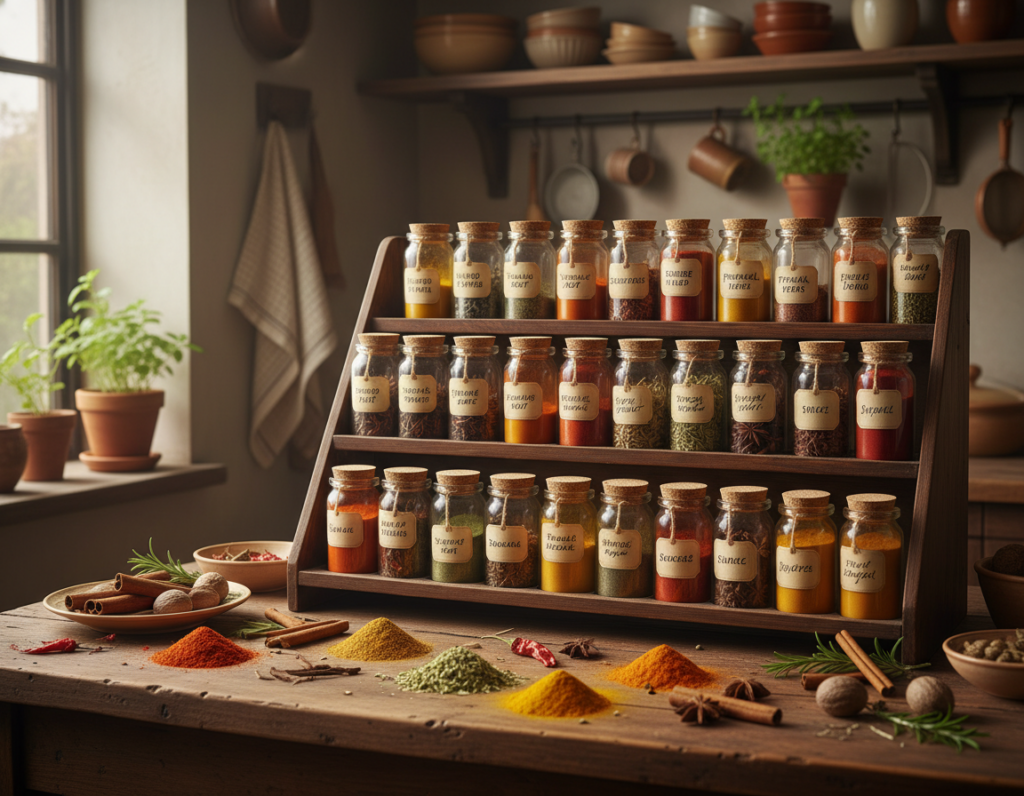
Best containers and placement: Use opaque glass jars or tins and keep them in a dark cupboard away from stove steam and oven heat. Make containers airtight to slow oxidation and retain flavor.
Freezer tips for rarely used items: Pack in airtight bags or jars, avoid repeated thawing, and always bring a packet to room temperature before opening to prevent condensation.
How to tell when to replace: Label jars with purchase month/year and an optional “best by” date. Do a simple sniff test; if the aroma smells faint, dusty, or flat it won’t lift your foods and should be replaced.
| Storage Task | Why It Helps | Quick Rule |
|---|---|---|
| Opaque, airtight jars | Blocks light and air | Keep near pantry, away from stove |
| Freezer for rare items | Slows degradation | Thaw before opening; limit cycles |
| Labeling | Tracks age over time | Write month/year on each jar |
| Sniff test | Detects loss of flavor | Replace if aroma is weak |
Note: Ground items oxidize faster than whole ones, so buy smaller amounts when needed. Quality pays off—small amounts of fresh seasonings transform ordinary foods far more than large jars that have sat too long.
Must-Have Spices in Cooking for Everyday Meals
A well-chosen set of staples gives fast, reliable flavor to everyday dishes. This short list covers basics and a few upgrades that work across breakfasts, weeknight dinners, and simple meal prep.
Black pepper
Taste: bright, sharp. Best for eggs, salads, soups, and stews.
Best practice: Grind fresh at the finish for punch; add whole early for long simmers.
Garlic powder & onion powder
Taste: savory shortcut for sauces, rubs, marinades, dips, and pasta.
Best practice: Use when fresh aromatics aren’t available; add early to soften raw edge.
Cumin, coriander, and chili blends
Taste: earthy, smoky backbone for chili, curry, roasted meat, and beans.
Best practice: Toast briefly or bloom in oil to unlock oils and deepen flavor.
Heat & color essentials
Chili powder, cayenne pepper, crushed red pepper, paprika, and smoked paprika add controlled heat and warm color.
Best practice: Start small, bloom spicy flakes in oil for more flavor, and adjust to taste.
Herbs and warm crossover notes
Oregano, thyme, bay leaves, and Italian seasoning build savory bases for sauces and stews.
Crossover spices—cinnamon, nutmeg, ground ginger, and cardamom—lend surprising depth to tomato sauce, béchamel, and curries when used sparingly.
| Staple | Flavor | Best Uses | Tip |
|---|---|---|---|
| Black pepper | Bright, sharp | Eggs, salads, soups, stews | Grind fresh at finish |
| Garlic & onion powder | Savory, rounded | Rubs, sauces, pasta, dips | Add early for mellow depth |
| Cumin / Chili powder | Earthy, smoky, warm | Chili, curry, roasted meat | Toast or bloom for power |
| Paprika / Smoked paprika | Warm color, mild smoke | Vegetables, meats, stews | Use smoked for barbecue-like depth |
Simple Ways to Use Spices to Upgrade Weeknight Dishes
Small, deliberate seasonings can turn a basic weeknight meal into something memorable. Use timing and small measures to get big flavor without extra effort.
Eggs, potatoes, and veggies
For scrambled eggs or roasted potatoes try paprika + black pepper for color and lift. Add garlic powder and cumin to roasted root vegetables for earthy depth; a pinch of cayenne gives a controlled kick.
Soups, stews, and sauces
Start with an onion and garlic base, then bloom chili powder or cumin in oil to unlock aroma. Add bay leaves and thyme early for steady background notes, and finish with oregano or fresh pepper to lift the final taste.
Pasta and pizza night
Transform a jarred sauce by briefly blooming crushed red pepper and garlic powder in olive oil, then stir into the sauce. Finish with cracked black pepper and a sprinkle of oregano for a restaurant-like dish.
Meat, rubs, and marinades
Balance smoked paprika for smoke, garlic for aromatics, cumin or coriander for warmth, and cayenne for heat. Rubs work best when applied 30–60 minutes before grilling; marinades benefit from turmeric or curry powder for color and rounded flavor.
Baking and cozy drinks
Use cinnamon and nutmeg in oatmeal or lattes; add ginger and cardamom to tea for a warm, fragrant note. Scale back sugar slightly when adding warm notes so sweetness and warmth stay balanced.
Rescue moves: Salt late, brighten with pepper at the end, add a small pinch of heat for warmth, or simmer a sauce longer to deepen flavor. For quick reference on technique, see cooking with seasonings.
Conclusion
A few targeted pantry picks can change a weeknight dish from bland to balanced. Start with simple seasonings, pick the right one for the dish, and add at the moment that brings the most aroma and taste.
Use both herbs and dried aromatics to create layered aroma. Remember the spice versus herb difference: whole items like peppercorns or cinnamon stick last longer and toast well, while ground cumin or coriander offer quick integration for fast sauces or a simple sauce boost.
Storage is your hidden upgrade: opaque, airtight jars in a cool, dark cupboard and clear labels keep jars potent. Replace any jar that smells flat.
Next step: choose a short list—black pepper, cumin, paprika, oregano, chili powder—and try one new combo this week. Start small, taste, and adjust for clean, balanced flavor.