This brief cooking oils guide shows how to match the right oil to heat, taste, and health goals for everyday home cooking in the United States.
Oils change more than texture; they affect browning, mouthfeel, and the final flavor of many dishes.
The best choice depends on context: high heat or low heat, neutral or bold taste, and whether the oil will be heated or used as a finishing drizzle.
Expect clear tips on smoke point, refined versus unrefined labels, and how fatty acids affect stability when you heat an oil.
Many oils share similar uses, but processing, quality, and storage change performance over time. This section previews practical “when to use it” recommendations and label decoding so shoppers can compare bottles with confidence.
How to Choose a Cooking Oil for Any Dish
Start by matching an oil’s behavior with the job you need it to do: searing, dressing, or finishing.
Smoke point basics and why overheating oil matters
Smoke point is simple: the oil gleams, then it starts to smoke. When it smokes, flavor can turn bitter and delicate nutrients in unrefined oils break down.
“A few wisps of smoke in very hot wok work can happen, but constant smoking signals oil breakdown.”
Smoke points vary widely (500°F) and drop with poor quality, air exposure, or high free fatty acid content.
Flavor goals: neutral oils vs flavorful oils like sesame
Neutral oils stay out of the way and are ideal for high heat searing and frying.
Flavorful oils such as sesame oil add character and belong in noodle dishes, marinades, and as a finishing drizzle.
Health priorities: balancing fat types without getting lost in labels
Focus on balance: mix saturated, monounsaturated, and polyunsaturated fats instead of chasing buzzwords.
Fatty acids affect stability—polyunsaturated fats are more sensitive to heat, light, and air, which can change performance and storage.
Rule of thumb: use a higher-smoke-point option for high heat, keep a neutral everyday bottle, and reserve one or two specialty oils for flavor and specific benefits.
- Shimmer → smoke = stop and lower heat.
- High-heat tasks = higher smoke point.
- Finish or dress = flavorful, delicate options.
| Use | Ideal Feature | Example |
|---|---|---|
| High-heat searing | High smoke point, stable | Refined avocado, refined seed oils |
| Sautéing & everyday frying | Neutral flavor, moderate-high smoke point | Light olive, canola |
| Finishing & dressings | Distinct flavor, low-heat use | Sesame oil, extra virgin olive oil |
Refined vs Unrefined Oils and What Popular Labels Really Mean
Processing defines performance. From pressing method to refining steps, each choice affects flavor, smoke point, and nutrient content.
Cold-pressed and expeller-pressed: what these processes imply
Cold-pressed typically means the oil was pressed in temperature-controlled conditions (often under ~120°F) to keep more flavor and nutrients intact.
Expeller-pressed uses high pressure; friction can raise temperature slightly, so expect more variation in taste and heat sensitivity.
Refined oils: higher heat tolerance, longer shelf life, fewer nutrients
Refined products are filtered and often heated, bleached, or deodorized to remove strong flavors and chemicals used in extraction in some mass-market examples.
This boosts smoke point and shelf life but reduces flavor compounds and some nutrients. Some brands use non-solvent methods; look for clear sourcing and processing notes.
Virgin vs extra virgin olive oil: label meaning and limits
For olive oil, terms like virgin and extra virgin generally signal less processing and stronger flavor. International standards make these terms more reliable for olive than for other seeds.
- Unrefined: minimally processed, tastes like its source—best for dressings and finishing.
- Refined: neutral, stable, better for high-heat work but lower in original nutrients and flavor.
- Buyer tip: store in a cool, dark place and replace bottles once smell or taste turns stale.
| Label | Typical Feature | Best Use |
|---|---|---|
| Cold-pressed | Preserves flavor & nutrients | Dressings, finishing |
| Expeller-pressed | Stable yield, mild heat | Everyday sautéing |
| Refined | Higher smoke point, less flavor | High-heat frying |
Practical plan: keep two bottles—one refined neutral oil for high heat and one flavorful unrefined option (often extra virgin olive oil) for dressings and moderate heat. For more on choosing between processes, see refined vs unrefined oils.
Cooking Oils Guide to Smoke Points and Best Uses by Heat Level
Pick the right bottle by thinking about how hot you’ll get the pan. Below is a quick framework to match an oil to the task so you avoid smoke and preserve flavor.
High-heat: frying, stir-frying, grilling, broiling
Use stable, refined options for deep-frying or broiling. These resist smoke at very high temperatures and help prevent bitter notes.
Medium-heat: sautéing and baking
For everyday sautéing and most baking, choose a moderate-smoke oil. Extra virgin olive oil can work for many tasks in this range.
Low-heat: gentle sautéing and delicate flavors
Lower temperatures preserve aroma. Use oils that add flavor without scorching soft aromatics or spices.
No-heat: dressings, drizzles, and finishing
No-heat uses protect volatile compounds. Use unrefined options for dressings and finishing to highlight taste.
Why free fatty acids and oxidation matter
Higher free fatty acid (FFA) content and oxidation lower performance over time. As oil ages with heat, light, or air, it smokes sooner and tastes rancid.
Storage tip: keep bottles sealed and cool. Buy smaller bottles if you use a flavor-forward option slowly.
| Heat Level | Approx. Smoke Point Range | Typical Uses |
|---|---|---|
| High | ~400–520°F | Frying, grilling, broiling |
| Medium | ~325–400°F | Sautéing, baking |
| Low/No heat | Gentle sauté, dressings, finishing |
Best Oils for High Heat Cooking and Frying
When heat climbs, choose an oil that stays calm and predictable under pressure. High-heat tasks need stability so flavor and texture stay consistent.
Refined avocado oil for very high heat searing
Refined avocado oil handles roughly 480–520°F, so it’s ideal for searing and strong browning. Use it for skillet sears and quick pan-finish frying where you want deep color without constant smoking.
Refined coconut oil for a mild, clean profile
Refined coconut oil runs near 400–450°F and offers a cleaner, milder finish than unrefined versions. Choose it when you want neutral flavor but need solid heat tolerance, such as sheet-pan roasting or stir-fry.
Refined seed oils: use and processing to watch
Many refined seed oils work well for repetitive frying. Check labels for expeller-pressed claims and avoid vague processing notes that may hide chemical extraction or deodorizing.
- Realistic uses: sheet-pan roasting, skillet searing, stir-fry, shallow frying.
- Reuse caution: repeated heating increases oxidation and off-flavors—discard when dark or smoky.
- Buying checklist: smoke point range, processing method, bottle size, flavor fit.
| Oil | Approx. Smoke Point | Best High-Heat Uses |
|---|---|---|
| Refined avocado oil | 480–520°F | Searing, high-temp frying |
| Refined coconut oil | 400–450°F | Sheet-pan roasting, stir-fry |
| Refined seed oils | 375–450°F | Deep-frying, repetitive frying |
Everyday Favorites: Olive Oil, Avocado Oil, Coconut Oil, and Sesame Oil
Everyday pantry bottles like olive and avocado often cover most home needs without fuss. Choose by how much heat you’ll use and how bold you want the final flavor.
Extra virgin olive oil for dressings, dips, and moderate-heat work
Extra virgin olive oil shines in dressings, dips, and many moderate-heat tasks. Use virgin olive oil with peppery or fruity notes for finishing, and milder bottles for routine frying or roasting.
Avocado oil: a versatile workhorse
Avocado oil is neutral and heat-tolerant. It works well for sautéing, sauces, and when you need a less olive-forward dressing base.
Coconut oil for baking swaps and texture
Coconut oil is solid at room temperature, so it replaces butter in many baking recipes and adds a gentle tropical note when desired.
Sesame oil for bold finishes and Asian-style dishes
Sesame oil is potent; a little defines noodle and stir-fry flavors. Choose refined sesame for higher-heat use and unrefined for finishing.
- Pairings: sesame with soy, ginger, garlic; olive with lemon and herbs.
- Avocado complements creamy dressings; coconut pairs with chocolate or warm spices.
- Store all bottles in a cool, dark place; refrigerate delicate items if you use them slowly.
| Oil | Best Use | Flavor Profile |
|---|---|---|
| Extra virgin olive oil | Dressings, moderate-heat | Peppery to fruity |
| Avocado oil | Sautéing, sauces, dressings | Neutral, light |
| Coconut oil | Baking swaps, texture | Subtle coconut, sweet |
| Sesame oil | Finishing, noodle dishes | Toasty, bold |
Health Snapshot: Fatty Acids, Heart Considerations, and Oils to Limit
Clear basic idea: fats differ by chemical structure, and that shapes how you use them and how they affect heart health.
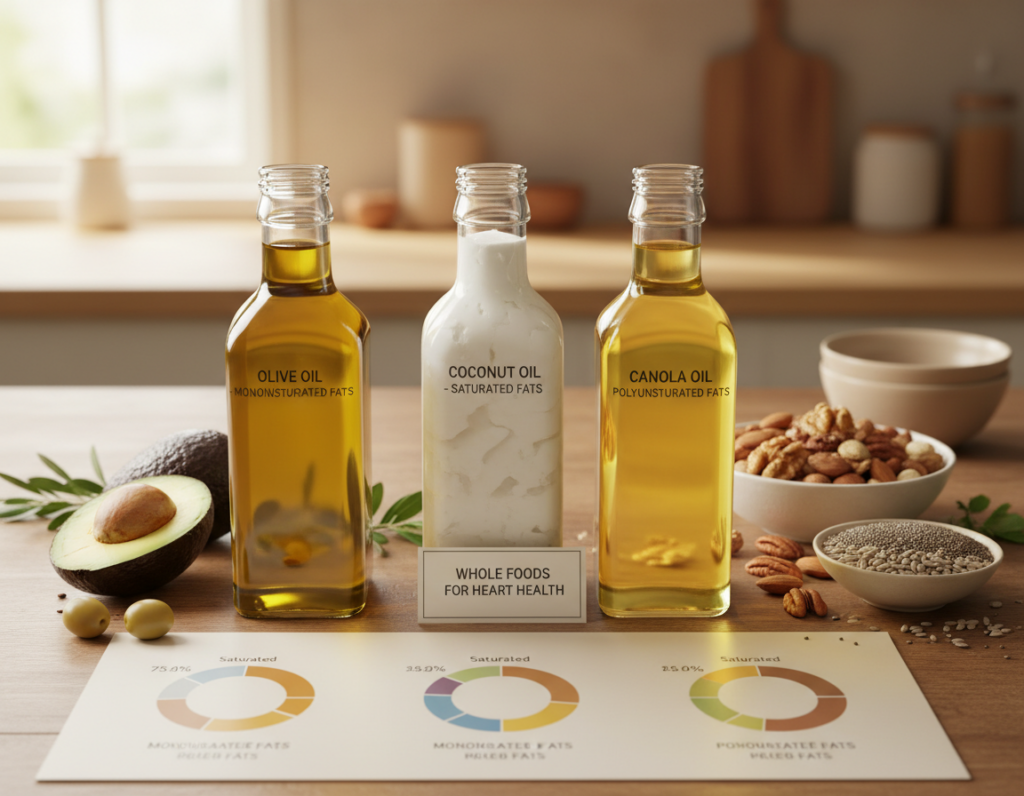
Saturated, monounsaturated, and polyunsaturated explained
Saturated fats have no double bonds and are more heat-stable. They suit high-heat tasks but are best used in moderation for overall heart health.
Monounsaturated fats have one double bond and are linked with heart-friendly patterns like the Mediterranean diet. They work well for everyday pan work and dressings.
Polyunsaturated fats contain multiple double bonds. They include essential fatty acids but are more sensitive to heat, light, and air.
Omega balance and storage matters
Omega-3 and omega-6 are both essential polyunsaturated fatty acids. Many U.S. diets skew toward omega-6 (estimates as high as ~15:1), while targets often sit near 1:2 to 1:4.
Practical step: use omega-3-rich oils as drizzles or cold additions and keep polyunsaturated bottles sealed, cool, and dark to limit oxidation.
Trans fats and label checks
Hydrogenated and partially hydrogenated fats form trans fats that raise blood cholesterol and increase heart disease risk.
Check labels: avoid any product listing “hydrogenated” or “partially hydrogenated.”
Processed food caution and common items to limit
Heavily refined seed and industrial oils may appear in ultra-processed foods and carry dietary tradeoffs beyond their fatty profile.
- Examples often recommended to limit in processed forms: soybean, corn, cottonseed, canola/rapeseed, sunflower, grapeseed, safflower, rice bran.
- Focus on minimally processed options at home and reserve neutral, high-heat bottles for tasks where needed.
| Category | Stability | Everyday tip |
|---|---|---|
| Saturated fats | High heat-stability | Use sparingly for high-heat or baking needs |
| Monounsaturated fats | Moderate stability | Good everyday choice for sautéing and dressings |
| Polyunsaturated fats (omega-3/6) | Heat- and light-sensitive | Use cold or low-heat; store tightly sealed |
Balanced view: aim for pattern over perfection—prioritize monounsaturated-rich options, protect delicate fatty acids from heat and air, and avoid trans fats to lower heart disease risk. For a deeper look at omega-3s and heart outcomes, see omega-3 fatty acids in cardiovascular health.
Conclusion
A practical pantry assigns each oil a single role: one bottle for high heat, one for everyday use, and one for finishing drizzles.
Choose by heat level, desired flavor, and how the oil was processed rather than hunting for a single “best” label. Refined options tolerate high heat and store longer; unrefined bottles offer stronger taste and delicate compounds best used cold or low-heat.
Manage heat to protect taste and quality. Keep bottles sealed in a cool, dark place and buy sizes you’ll use before the oil turns stale.
For health: favor unsaturated fats when they fit your diet, limit exposure of polyunsaturated fatty acids to heat and light, and avoid hydrogenated or trans-containing products.
Final step: review your pantry, assign each cooking oil a job (sear, sauté, finish), and replace any bottle that smells rancid or looks past its prime.